

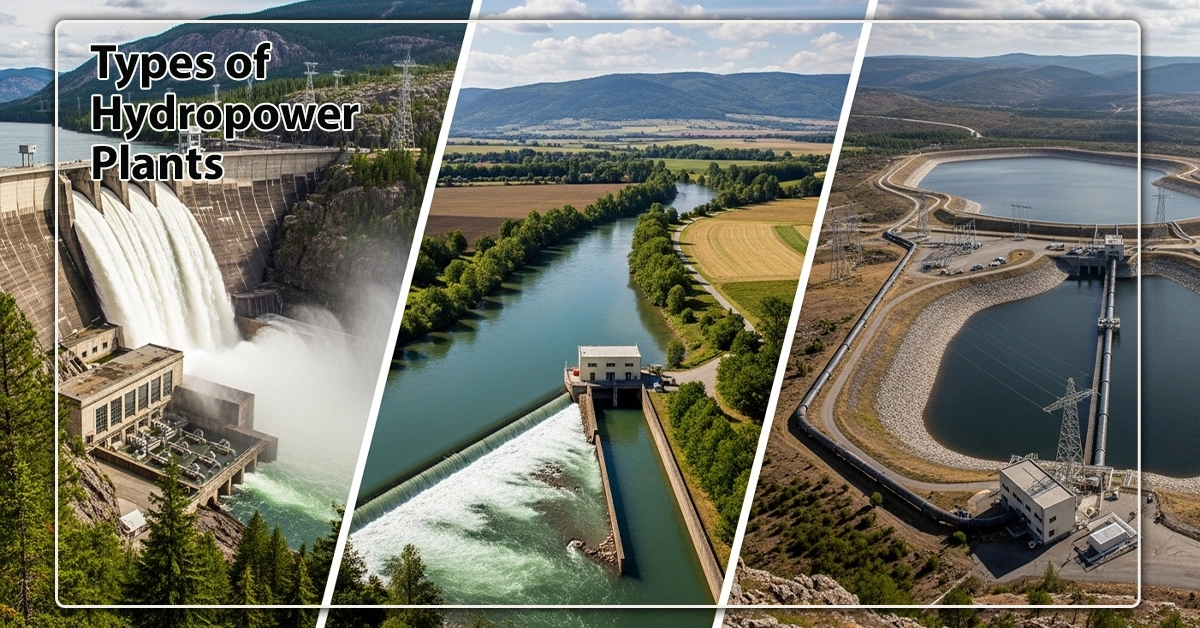
Hydropower is the source of 16% electricity worldwide, showing how water is an excellent renewable energy source. The hydropower dams also manage water resources, keep floods in check, and support local irrigation.
Today, when we are trying to transition from fossil fuels to sustainable energy sources, hydropower stands out. In this guide, let’s understand the types of hydropower plants, how a hydropower plant works, and the pros and cons of these systems.
TL;DR
- Hydropower is one of the most reliable and long-lasting renewable energy sources. Its applications range from large dams to small micro systems.
- Different types of hydroelectric plants serve different needs. Some generate energy while others store and balance it.
- While highly efficient, hydropower must be carefully planned due to environmental and social impacts.
- Hydropower plays an important role in supporting other renewable energy sources and contributing to a clean future.
What Is Hydropower?
Hydropower or hydroelectric power is electricity produced by leveraging flowing water. It harnesses the natural force of water, such as a flowing river, to spin turbines connected to generators.
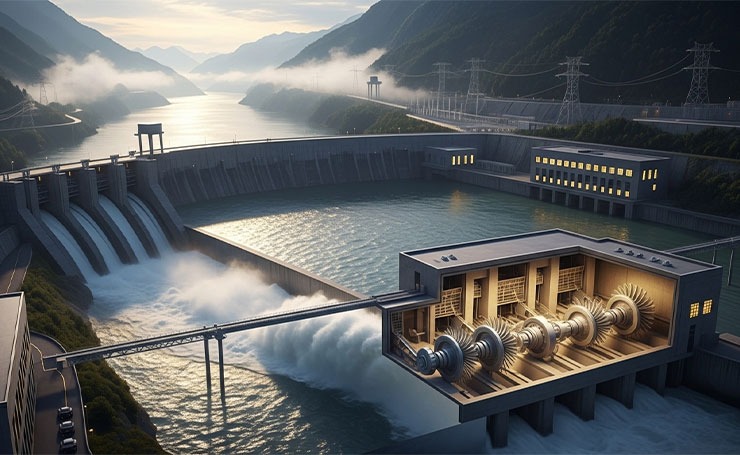
This process dates back to ancient times when people used water wheels to grind. Then, in the late 19th century, hydropower became a source of electric generation, which laid the foundation for modern power plants.
Right now, it is one of the most effective and eco-friendly ways to generate electricity. Located in China, the Three Gorges Dam holds the record of the world’s largest dam. It is so powerful that it can power an entire country. Its capacity to generate 22,500 megawatts of electricity shows how much energy a modern hydroelectric power plant can produce.
Learn what hydropower is in detail in this guide.
Main Types of Hydropower Plants
Hydropower plants have different types that are explained below.
Impoundment Power Plant
Impoundment is the most common type of hydroelectric power plant. It is a larger hydropower system and uses a dam to store river water in a water reservoir. The water is released to spin the turbine and produce electricity.
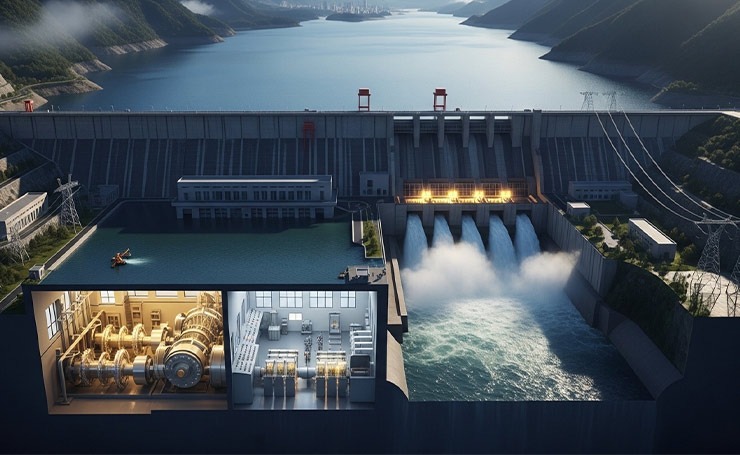
Large impoundment plants give you the benefit of control. They can store water during the wet period and produce electricity during the drier period or peak demand times.
Pumped Storage Power Plant
These power plants act like a giant battery for the electric grid. A pumped storage plant usually has two reservoirs: one at the top and another at a lower elevation.
During low-demand periods or excess power on the grid, the plant uses surplus or cheap electricity to move water from the lower reservoir to the upper one. During peak demand times, water is released back down using turbines to produce electricity.
Pumped storage power plants do not generate new energy; however, they are useful for storing it and balancing the grid.
Diversion Power Plant
A diversion plant, also known as a run-of-river plant, uses the natural flow of a river to produce energy. It usually does not need a large reservoir. Instead of using a big dam, a diversion plant uses a small structure called a weir. It diverts a portion of the river towards the turbine through a channel or penstock. Then the water is returned to the river downstream.
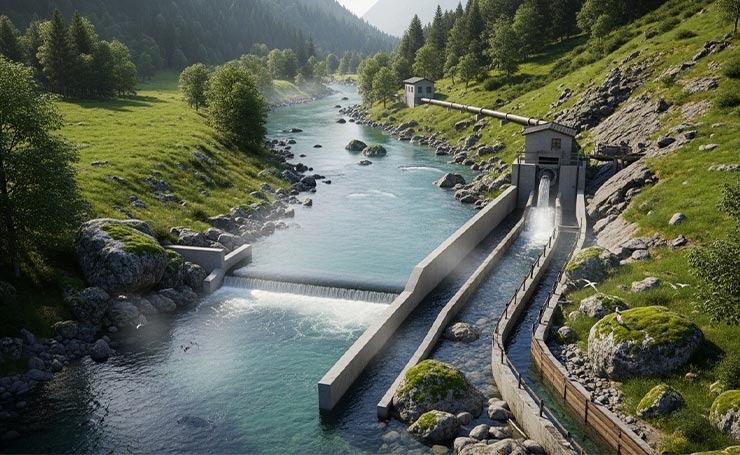
Run-of-river plants depend on continuous river flow, resulting in variable energy output. Additionally, they have minimal storage capacity and cannot hold a lot of water in reserve. However, due to the lack of vast reservoirs, they have a smaller environmental footprint than large-scale dams.
Micro Hydropower Power Plant
Micro hydropower systems can produce energy outputs of less than 50 to 100 kW. These work by taking in water from a river and then converting it into electricity. However, they need less construction work than larger dams.
These power plants are suitable for powering single properties or small communities, depending on installation size. Micro hydropower plants usually have the same basic construction, with a turbine connected to a generator, which is connected to a home, providing electricity.
Components of a Hydropower System
There are various components in a hydroelectric power plant.
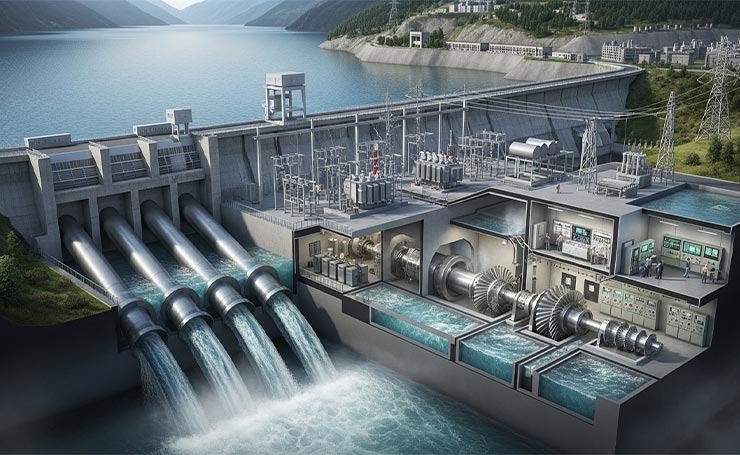
- Dam: It is one of the most important parts of the entire electricity-generating process. It reserves water to produce electricity. It creates a reservoir at a certain height. When the gate is opened, the water rushes with great force. It dives onto the turbines, producing electricity.
- Reservoir: It contains river water and releases it when the dam needs to produce electricity. The size and depth matter a lot. The more water it can store, the more electricity the dam can produce during drier periods.
- Penstock: It is used to transfer water from the reservoir to the turbine and to control the water’s force. It also protects the turbine from damage, directing water flow precisely.
- Turbine: It is the source in a power plant that produces electricity. A hydroelectric power plant’s power output depends on the water flow over the turbine blades. With more spinning comes more electricity.
- Generator: It is a component in a dam that is responsible for changing mechanical energy into electricity. It starts by using the spinning rate of the turbine to collect energy. Then, using the magnetic field present inside, it produces an electrical current, which is transferred to the grid and then to your home through a power line.
- Control Systems: These systems are controlled by an operator who adjusts everything from the rate of water flow, the opening and closing of the dam gate, turbine speed, and other functions.
- Transformer: It regulates the voltage in a hydropower plant. After the turbine generates electricity, the output often comes at a lower voltage. A transformer converts it to a higher voltage. Transformers are suitable for domestic and industrial use after the energy conversion.
- Powerhouse: This is the place where turbines, generators, and other components are installed. Due to this, different reactions happen all the time at a dam’s powerhouse.
- Intake and Outflow Systems: The intake system manages the water flow from the reserve to the turbine. The outflow system collects energy released after energy production. Both systems have important roles in generating sustainable energy from hydroelectric power plants.
How a Hydroelectric Power Plant Works
The amount of energy a power plant generates depends on two main factors: the volume of water and the height from which it falls (called head). More water flow and higher head usually result in more power production.
Let’s see how a hydropower plant works.
- Water Intake
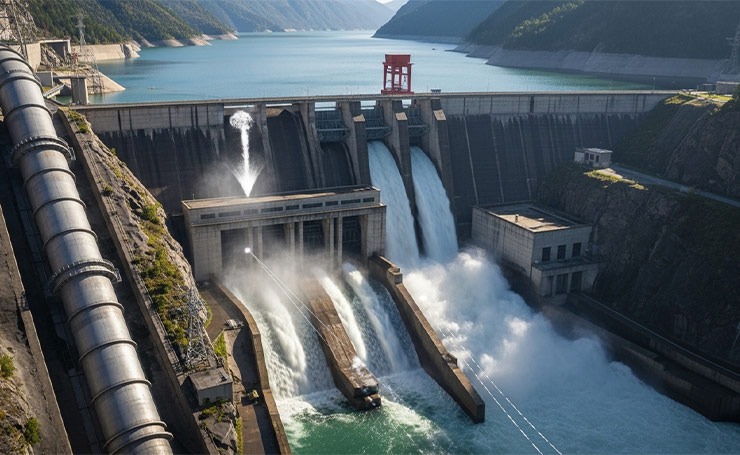
Water from a reserve or reservoir, often behind a dam, is directed into an intake. It flows through a massive pipe known as a penstock. When the water is at the top of the dam, it has potential energy, and when it rushes down the penstock, it converts to kinetic energy.
- Spinning of Turbine
As water flows through the penstock, it pushes the turbine blades. As the blades spin, the generator starts working.
- Electricity Production
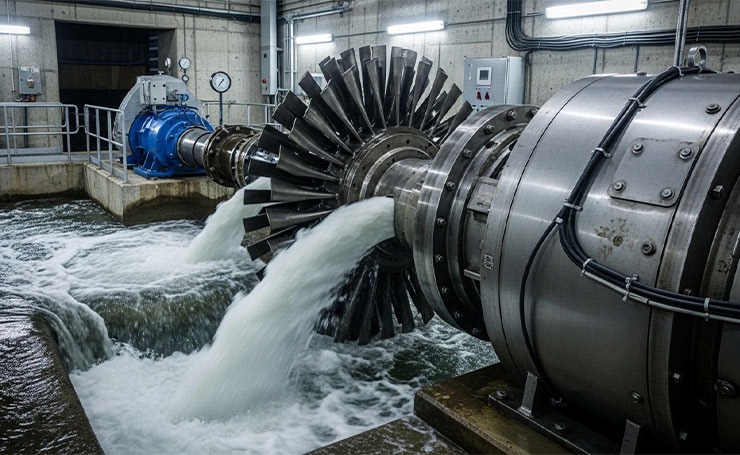
The turbine is basically connected to the generator. When the turbine blades spin, they turn the magnet inside the generator. The mechanical energy of the water is changed into electrical energy through electromagnetic induction. The generator produces electricity while the water keeps coming in and out of the turbine.
- Power Output and Transmission
The generated electricity is then sent to the transformer that raises the voltage. Then, through power lines, the electricity is transferred to homes and businesses. When the water passes through the turbine, it flows downstream of the power plant.
Types of Hydraulic Turbines Used
Hydraulic turbines are at the heart of hydropower plants. These are categorized into two groups based on how water spins them: Reaction and Impulse.
Impulse Turbines
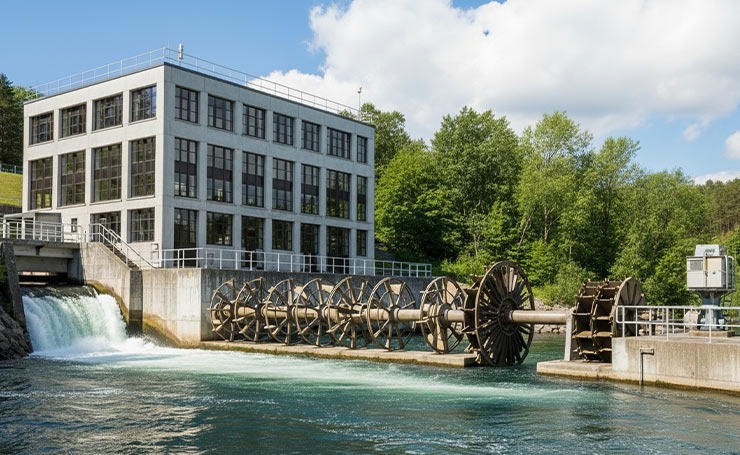
- Pelton Wheel: It is the most famous type of impulse turbine. It has buckets shaped like double spoons.
- Turgo Wheel: It is similar to the Pelton wheel, but the water hits it at an angle.
- Cross-Flow Turbine: It allows water to flow across the blade twice, once in and once out.
Reaction Turbines
- Francis Turbine: It is the most common turbine in the world. The water enters from the sides and exits through the center.
- Kaplan Turbine: It looks just like a boat propeller. The blades can also be tilted for efficiency when the water flow changes.
- Propeller Turbine: It is a simpler version of Kaplan, but with blades that do not move.
Pros and Cons of Hydropower Systems
| Hydropower System | Pros | Cons |
| Impoundment Hydropower | Reliable and controllableLarge-scale powerSupports water management | Environmental impactHigh costCommunity displacement |
| Pumped Storage Hydropower | Energy storage solutionGrid stabilizationSupports renewables | High investmentLocation-specificEnergy loss |
| Diversion Hydropower Facility | Less invasiveEfficient water useFlexible design | Alters the river flowLimited storage |
| Micro Hydropower Systems | Great for remote areasLow environmental impactAffordable | Great for remote areas, Low environmental impact, affordable |
Hydropower in the Modern Energy Mix
Hydropower plays a critical role in the transition to clean energy. It is not only a reliable source of electricity but also complements other renewable energy sources, such as solar, wind, and geothermal.
Technologies like pumped storage hydropower are particularly important to balance energy supply and demand. Moreover, micro hydropower systems are now helping bring electricity to underserved regions.
As more people embrace sustainability, hydropower stands out as an efficient energy source with a lower environmental impact.
Wrapping Up
Hydropower is a powerful renewable energy source. It has multiple power plants designed for different needs. From large-scale impoundment systems to small micro ones, each type has its own pros and cons. It is important to understand these differences to choose the right system and understand how hydropower is contributing to a clean future.
Interested in learning more about renewable energy? Visit Green Energy Insights for in-depth guides.
FAQs
What is the Most Efficient Type of Hydropower Plant for Modern Energy Systems?
The most efficient systems today are usually large-scale impoundment plants for consistent output. The pumped storage plants are considered the most efficient for energy storage and grid balancing.
Can Hydropower Plants Work in Regions with Low Water or No Rivers?
Yes, hydropower plants work, but in limited ways. Pumped storage systems can be used where elevation differences exist, but only if the natural water flow is low. However, traditional hydropower needs constant water availability.
What is the Lifespan of a Hydropower Plant, and how does it compare to other Energy Systems?
Hydropower plants usually last for 50 to 100 years or more. They are among the most long-lasting forms of energy infrastructure, compared with solar panels and wind turbines, which often last around 20 to 30 years.
What are the Maintenance Requirements for Hydropower Plants?
Regular maintenance includes turbine inspection, removing debris, sediment management, and mechanical system checks to ensure efficiency and prevent damage and wear.
