

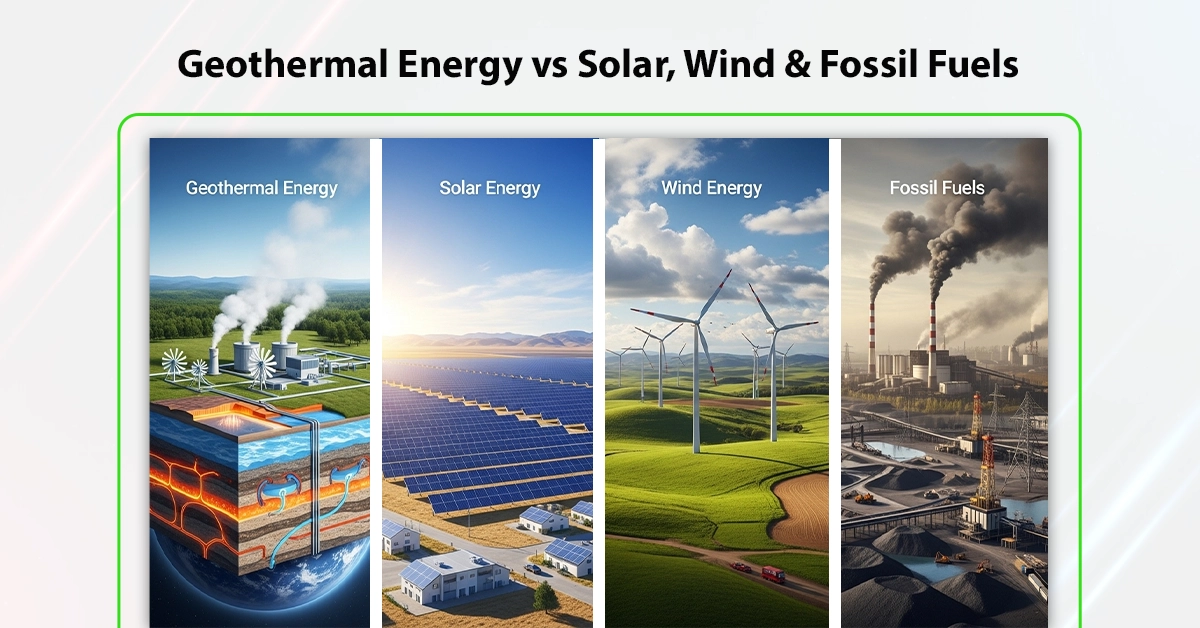
When talking about renewable energy, you must have mostly heard about solar, wind, and hydropower energy sources. However, a lesser-known, but equally important, green energy source is geothermal energy.
In this guide, we compare this renewable energy with other renewables, including solar, wind, and hydropower, as well as fossil fuels.
Key Takeaways
- Geothermal energy provides stable baseload power compared to intermittent renewable energy resources, like wind power and solar energy.
- Geothermal has a smaller land footprint and lower gas emissions than fossil fuels.
- High initial costs are a challenge when it comes to geothermal systems; however, long-term operational costs are significantly lower.
What Makes Geothermal Energy Unique
Unlike solar and wind power, geothermal energy taps into Earth’s internal heat. This heat is an inexhaustible resource that is available 24 hours a day, 365 days a year.
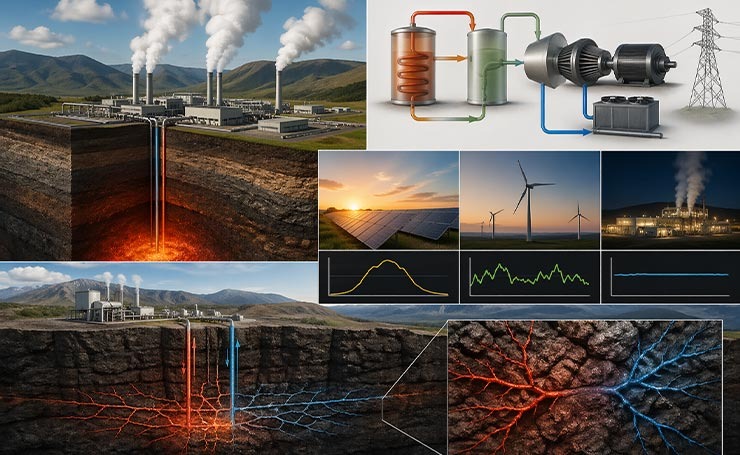
Traditional geothermal plants use hydrothermal reservoirs, steam pockets, and hot water trapped beneath the Earth’s surface. The heat from these sources is used to spin turbines and generate electricity.
Binary cycle plants take this method one step further. It uses moderately heated water to vaporize a secondary fluid with a lower boiling point. This method makes energy extraction possible in areas with less intense geothermal activity.
This continuous output is what sets geothermal energy apart. Solar and wind power are intermittent renewable energy sources and depend on sunlight and ideal weather conditions, respectively. Geothermal provides a stable baseload power regardless of the time of day or season, eliminating the need for energy storage solutions.
Moreover, EGS or enhanced geothermal systems are expanding the geothermal applications by using hot dry rock formations under Earth’s surface where natural water is absent. Using it, geothermal energy will be provided to those areas with no natural hot water reservoirs.
Geothermal vs. Solar Energy
When comparing geothermal energy and solar energy, the major difference is how and when each source produces power. Geothermal uses Earth’s core heat, which is available 24/7. It does not depend on the weather or daylight.
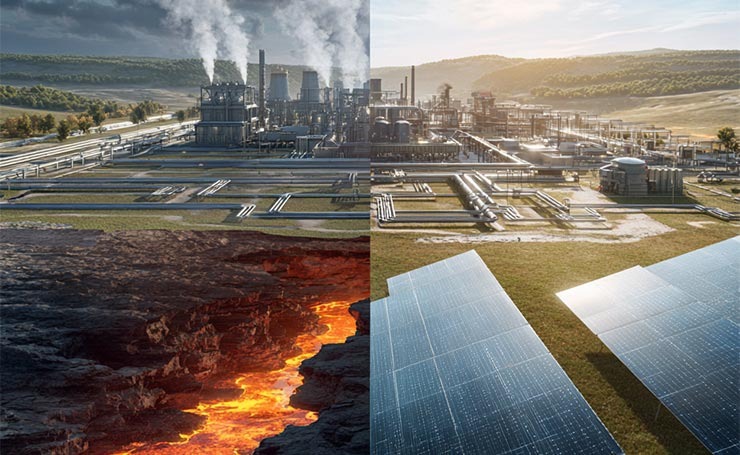
Solar energy, on the other hand, harnesses sunlight through photovoltaic (PV) panels. They convert sunlight into electricity. These panels can work anywhere with good sun exposure and work more efficiently with stronger and more direct sunlight.
Both of these renewables have trade-offs. Geothermal installation comes with high upfront costs, but provides consistent energy with a smaller physical footprint.
Solar energy has lower upfront costs and can be scaled from residential rooftops to utility-scale farms wherever sunlight is available. However, their output depends on sunlight and also depends on battery storage and grid support for a steady supply.
When it comes to environmental impact, both geothermal and solar are clean and renewable. Solar panels generate no emissions at all, while geothermal power plants emit very low amounts when managed properly.
Choosing which one is better depends on location, energy needs, and budget. Solar works perfectly anywhere with good sun, while geothermal performs the best where underground resources are available.
| Feature | Geothermal Energy | Solar Energy |
| Energy Source | Heat from Earth’s interior | Sunlight |
| Reliability | 24/7, baseload power | Intermittent, depends on sunlight |
| Land Use | Small footprint | Requires a large surface area for panels |
| Emissions | Very low | Very low |
| Efficiency | 10–20% (electric) | 15–22% (panels) |
| Cost | High upfront, low maintenance | Medium upfront, low maintenance |
Geothermal vs. Wind Energy
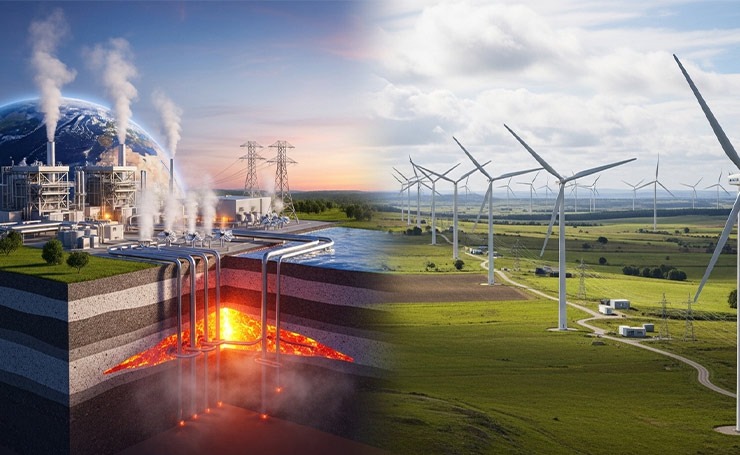
When comparing geothermal energy with wind energy, the biggest difference is reliability. Unlike the 24/7 presence of geothermal energy, which makes it a dependable source of baseload power, wind energy depends on wind speed and weather conditions. For a stable supply, wind farms need backup power or energy storage systems.
Other differences include
- Land Use: Geothermal power plants use significantly less land than wind farms. However, the land between turbines can still be used for farming.
- Efficiency: Wind turbines can convert 30-45% of wind energy into electricity. Geothermal plants usually achieve 10 to 20% efficiency.
- Environmental Impact: Both are considered low-carbon. However, geothermal plants may emit small amounts of gases such as carbon dioxide and hydrogen sulfide if not managed properly. Wind turbines do not emit any gases, but they can affect birds and bats.
- Costs: Geothermal has high upfront drilling costs but cheaper operating costs. In comparison, installing wind turbines is cheaper, but they require regular maintenance, which increases overall costs.
| Feature | Geothermal Energy | Wind Energy |
| Energy Source | Heat from Earth | Wind turbines |
| Reliability | Continuous | Intermittent, depending on the wind |
| Land Use | Small footprint | Large area, though land can be shared with agriculture |
| Emissions | Very low | Very low |
| Efficiency | 10–20% | 30–45% (turbine efficiency) |
| Cost | High upfront, low maintenance | Medium upfront, moderate maintenance |
Geothermal vs. Hydropower
Both geothermal and hydropower are low-carbon energy sources, but they operate very differently. Geothermal uses Earth’s heat, while hydropower harnesses the movement of water from rivers and dams.
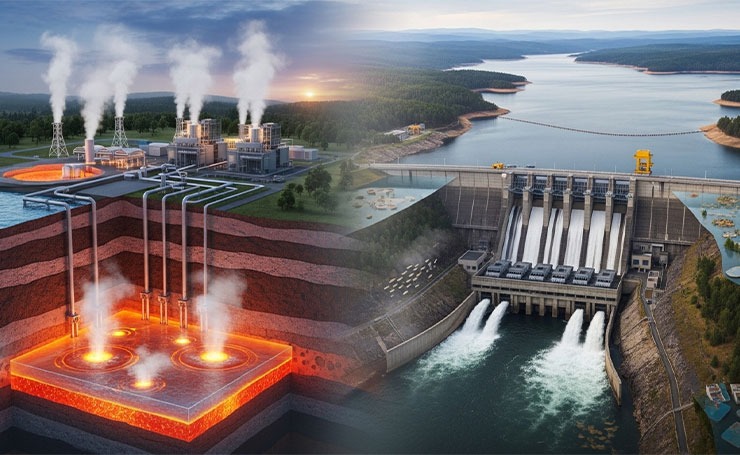
The main differences are
- Reliability: Geothermal provides constant baseload power that is not affected by seasons. Hydropower relies on river flow and rainfall, and its output fluctuates with these factors, including drought.
- Efficiency: Hydropower is more efficient than geothermal plants, converting 35 to 45% of water’s energy into electricity.
- Land Use and Environmental Impact: Hydropower needs large reservoirs, which can disturb ecosystems, flood areas, and affect fish populations. Geothermal plants cause minimal disruption, though they can cause induced seismicity.
| Feature | Geothermal Energy | Hydropower |
| Energy Source | Earth’s heat | Flowing or falling water |
| Reliability | Continuous | High, but seasonal variations exist |
| Land Use | Small footprint | Large (reservoirs, dams) |
| Emissions | Very low | Low, but methane from reservoirs is possible |
| Efficiency | 10–20% | 35–45% |
| Environmental Impact | Minimal | Alters aquatic ecosystems |
Geothermal vs. Fossil Fuels
Geothermal vs fossil fuels in essentially renewable energy vs non-renewable energy. While geothermal energy is inexhaustible with low-carbon emissions, fossil fuels are finite and a major source of carbon and other greenhouse gas emissions, air pollution, and climate change.
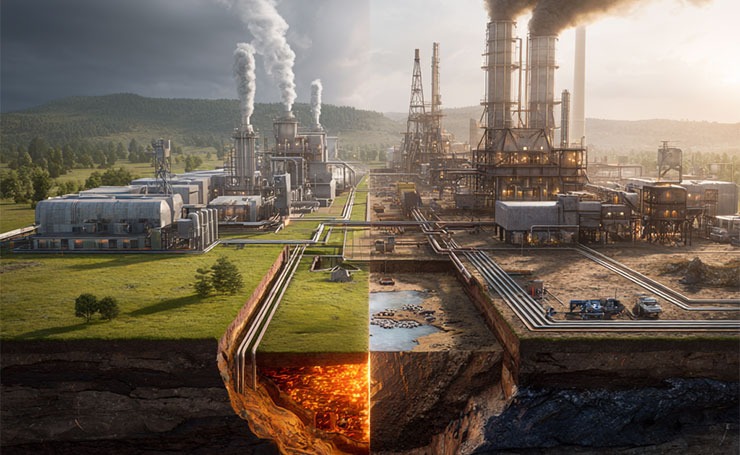
One of the biggest differences between them is sustainability. Geothermal power plants produce energy wherever suitable reservoirs exist, making them sustainable year-round. Fossil fuels, on the other hand, are finite and cannot be replenished within human timescales, making them unsustainable for future energy needs.
In terms of environmental impact, geothermal energy significantly produces less greenhouse gas, up to 98 to 99% fewer emissions, than coal or gas plants. Fossil fuel power generation is the leading source of carbon dioxide, nitrogen oxides, sulfur dioxide, and other pollutants, contributing to smog, acid rain, and other health issues.
Another difference is cost and infrastructure. Geothermal requires a high initial investment in drilling and well establishment, as well as specialized expertise to develop the system. Fossil fuel infrastructure is already established, with an existing supply chain and workforce experience that keeps operational costs low. However, considering long-term costs, fuel price volatility, and carbon pricing, geothermal becomes a better option.
Geothermal also has a small land footprint and uses minimal water compared to fossil fuel extraction and combustion. Activities like oil drilling, coal mining, and gas fracking not only disrupt ecosystems, but also use large bodies of freshwater. Geothermal plants occupy less space and recycle water within closed-loop systems.
| Feature | Geothermal Energy | Fossil Fuels |
| Energy Source | Earth’s heat | Coal, oil, natural gas |
| Reliability | Continuous | Continuous |
| Emissions | Very low | High CO₂ & pollutants |
| Cost | High upfront, low maintenance | Low upfront, volatile fuel costs |
| Environmental Impact | Minimal | High (pollution, climate change, mining impacts) |
| Lifespan of Resource | Essentially renewable | Finite, depleting |
Efficiency vs Capacity Factor
While wind energy and hydropower show higher energy conversion efficiency percentages than geothermal power plants, efficiency alone does not determine real-world power reliability.
Geothermal energy has a capacity factor of around 70 to 90 percent, meaning it can produce electricity close to its maximum output all year round. In contrast, solar energy has a capacity factor of around 15 to 25 percent, while wind energy operates at around 30 to 45 percent.
This means that geothermal energy provides more consistent annual electricity, even if its efficiency appears lower on paper.
Final Thoughts
This guide compares geothermal energy vs solar, wind, fossil fuels, and hydropower. From the comparison, we understood that geothermal is among the renewable energy sources that can generate continuous baseload power with minimal environmental impact. Other renewables, like solar, wind, and hydropower, depend on weather and natural conditions.
Geothermal is also a far more sustainable and low-carbon alternative to fossil fuels for long-term energy security, becoming a reliable energy source in the global clean energy transition.
Interested in more green energy facts? Feel free to explore Green Energy Insights for more blogs.
FAQs
Is Geothermal Energy more Reliable than Solar and Wind Power?
Yes, geothermal energy is more reliable than solar and wind because it is present 24/7 and does not depend on weather conditions. Solar and wind energy are intermittent renewables and rely on solid sunlight and ideal wind conditions, sometimes resulting in output fluctuations.
What are the long-term environmental risks of Geothermal Energy?
The potential risks of geothermal power include induced seismic activity, land subsidence, and minor gas emissions. However, modern technologies like closed-loop and improved geothermal systems reduce these impacts.
Is Geothermal Energy Cheaper than Solar and Wind in the Long Run?
Yes, despite its high upfront drilling costs, geothermal is cost-effective in the long run due to low operating expenses and stable power output.
