

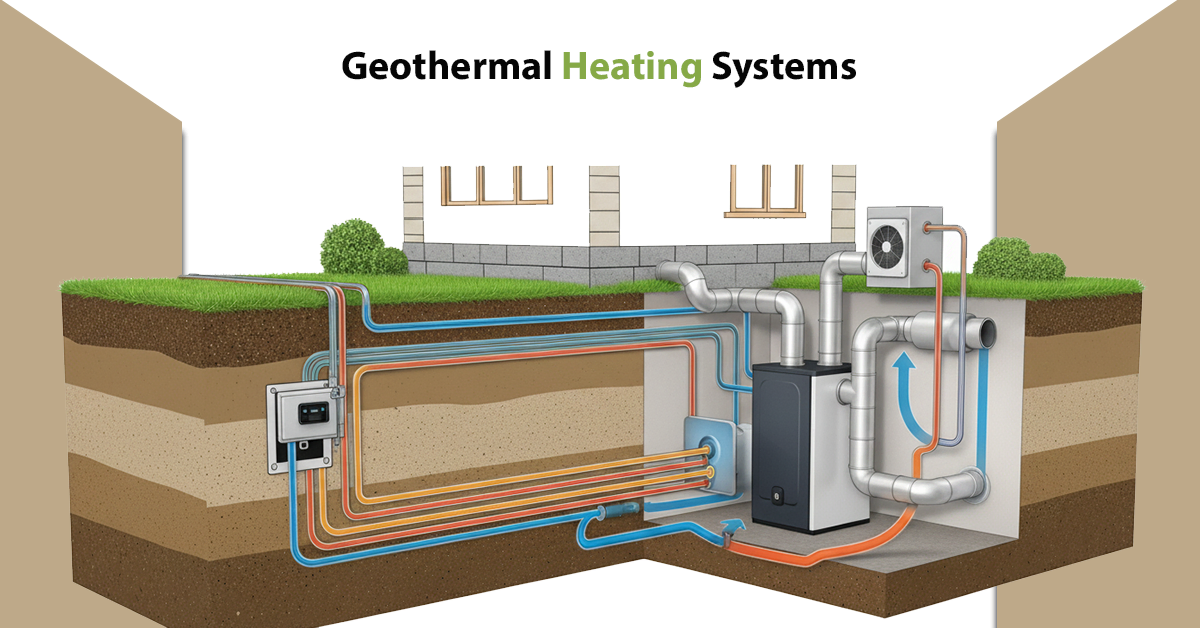
Geothermal heating systems are becoming popular as people try to find environmentally friendly and efficient ways to warm their homes. In this guide, we take a deep dive into geothermal heating, types of heat pumps, how they warm and cool residences, installation costs, benefits, and potential challenges.
30-Second Summary
- Geothermal systems provide 3 to 5 units of heat per unit of electricity consumed, completely outperforming a traditional HVAC system.
- These systems use renewable ground energy, do not emit greenhouse gases, and operate quietly.
- Despite higher upfront costs, energy savings and federal incentives make them cost-effective over time.
- These are versatile and suitable for single-family homes, small residential buildings, and even hybrid applications.
What Is a Ground Source Heat Pump?
A ground-source heat pump (also called a GSHP) or geothermal heating pump is an energy-efficient, electric HVAC system that heats and cools buildings by exchanging heat with the constant, moderate temperature of the earth.
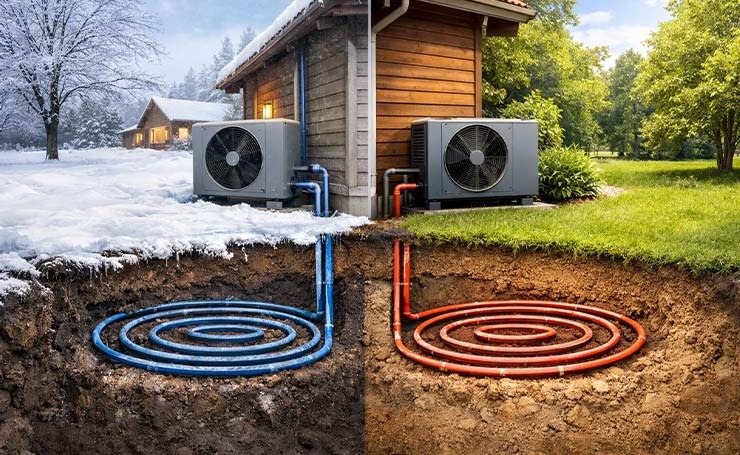
It uses buried underground pipes to transfer heat from the ground to homes in winter and reverse this process to cool them in summer.
Types of Geothermal Heat Pump Systems
These systems can be set in various ways, which are discussed below.
Closed-Loop System
These systems circulate water or a water-glycol solution through a closed loop of buried pipes. A heat exchanger moves the heat between the antifreeze liquid in the underground loop and the refrigerant in the heat pump.
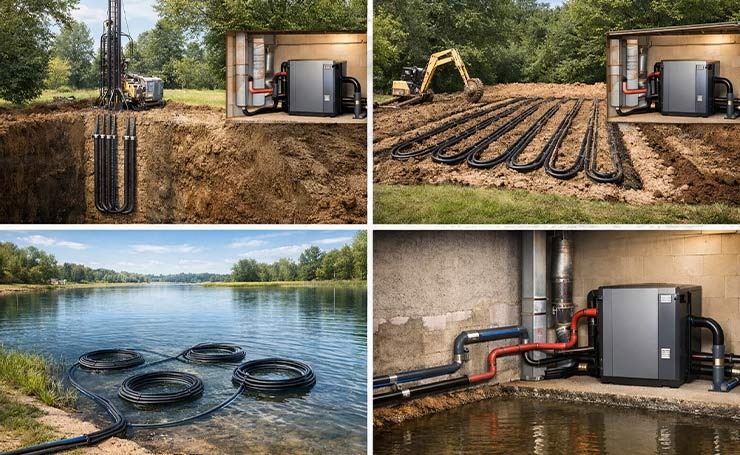
This system can be set up either vertically or horizontally.
- Vertical: This is the most common type of geothermal heating system. It needs less outdoor space. A well driller drills the holes, and the piping loops are installed vertically.
- Horizontal: The pipes in this setting are laid horizontally in the yard in a horizontal way. It reduces front-end costs because it can be installed with a backhoe rather than a drilling rig.
- Pond/Lake System: In this system, heat pumps exchange heat with water rather than the ground. The underground supply line is connected to the water and is coiled into circles.
Open-Loop System
This system uses groundwater as its heat source. Instead of using a closed loop of pipes that have liquid circulating in them, an open-loop system pumps groundwater directly into the heat pumps to transfer energy to homes.
Hybrid System
A hybrid system uses a combination of different geothermal resources or combines a geothermal resource with outdoor air (known as a cooling tower). These systems are generally useful when cooling needs exceed heating needs.
Residential Geothermal Heating and Cooling
This section explains how geothermal heating and cooling work for your residences.
Heat Exchange
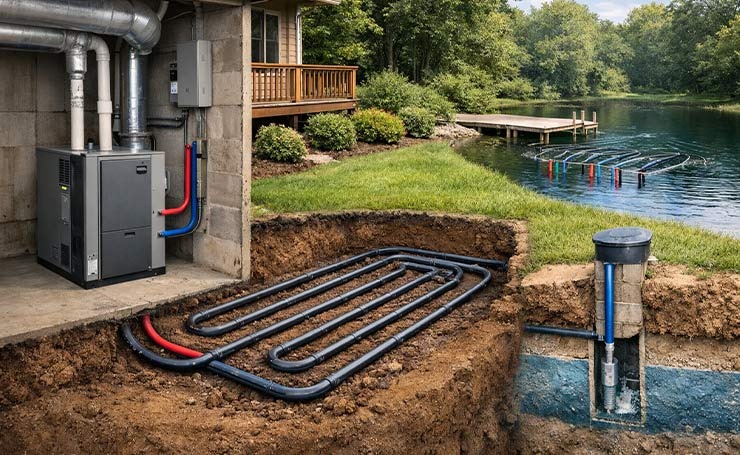
The geothermal system has a buried ground loop and a heat pump unit inside your house. The ground loop can be either buried in your yard or sunk in an ideal water body (pond or lake). It can also use well water.
Heat Absorption
The fluid in the ground loop absorbs heat from the earth through heat exchange, as the temperature beneath the ground remains constant throughout the year.
Heat Pump Operation
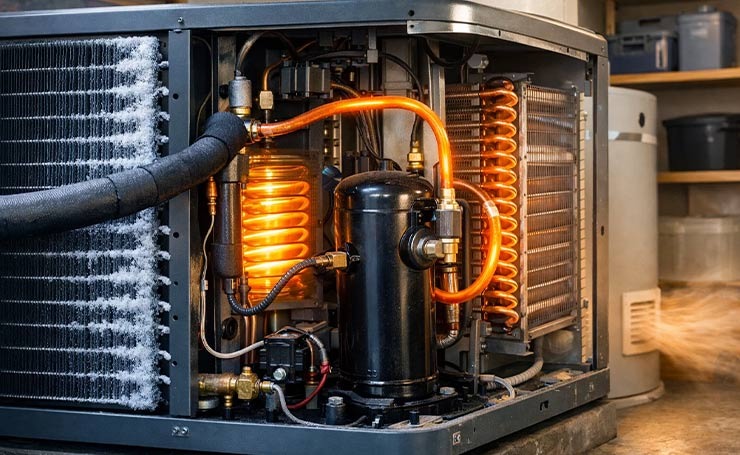
This liquid then carries the absorbed heat to the heat pump into the house. This pump uses a heat exchanger and a compressor to extract heat and compress it.
Heating Mode
During heating mode, the pump transfers heat into the residence’s distribution system, such as ductwork for air heating or underground heating, to provide warmth.
Cooling Mode
During the cooling mode, this process is reversed. The heat pump absorbs the warmth from the home’s inside and transfers it to the liquid in the ground loop. The heat is then released into the cooler earth.
Efficiency of Geothermal Systems
Geothermal energy is extremely efficient. Residential heat pumps usually have a Coefficient of Performance (COP) of 3.4 or higher. It means that they move heat rather than creating it through combustion.
Operating at 300–500% efficiency, these pumps produce 3-5 units of heating/cooling for every unit of electricity used. It makes them 3 to 6 times better than traditional heating systems and reduces energy costs and usage.
Moreover, geothermal systems last longer than traditional HVAC systems, which increases their long-term value and efficiency.
Geothermal vs Air Source Heat Pump
Both geothermal and air source heat pumps transfer thermal energy rather than burning fuel to offer cooling and heating. Geothermal heat pumps use stable underground temperature for this process, while air source heat pumps transfer heat from outside air.
| Feature | Geothermal Heat Pump | Air Source Heat Pump |
| Efficiency | Very high (COP 3–5) | Moderate (COP 2–3) |
| Operating Cost | Low | Higher |
| Installation Cost | High | Lower |
| Lifespan | 20–50 years | 15–20 years |
| Weather Dependence | Minimal | Performance drops in extreme cold |
| Noise | Very quiet | Slightly noisy |
| Space Required | Underground loop needed | Outdoor unit only |
Geothermal Heat Pump Installation Cost
Geothermal heat pump installation generally costs around $15,000 to $40,000 or more. This is more expensive than a traditional furnace and air conditioner combined. It is also more expensive than air source heat pumps, which cost around $16,000.
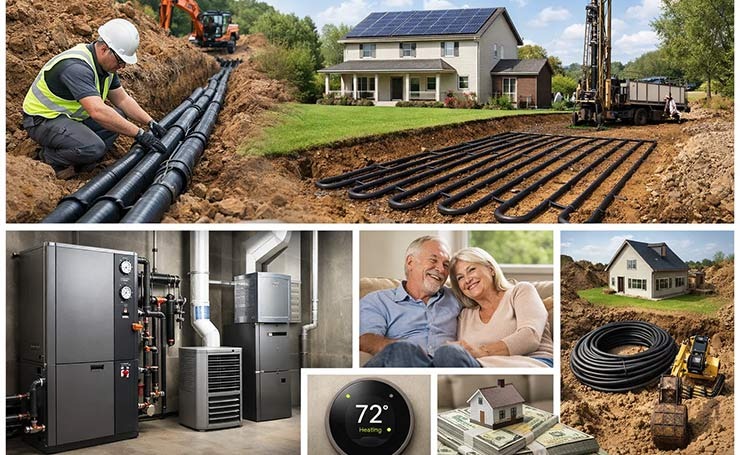
The final costs, however, depend on the following factors.
- Your location
- State and local incentives
- Property and system design
- Your region’s climate and soil type
- The layout and size of your residence
- The type of loop installed
- The specific equipment you choose
Despite higher installation costs, geothermal energy saves you money in the long run. It can cut energy consumption by 50%. Moreover, the underground loop lasts around 50 years or more, and the indoor unit can operate for 20 to 25 years, providing reliable and efficient cooling and heating to generations.
Government Incentives and Tax Credits
According to the US Department of Energy, low-income homeowners receive help with energy-related home repairs, weatherization, and home energy bills.
Moreover, residential heat pumps qualify for a 30% federal tax credit under the Inflation Reduction Act (through 2032, then tapering). It covers installation and equipment expenses with no maximum limit.
The requirements to qualify for the tax credit are that you must have an Energy Star-certified system installed in a home in the US.
Benefits of Geothermal Heating Systems
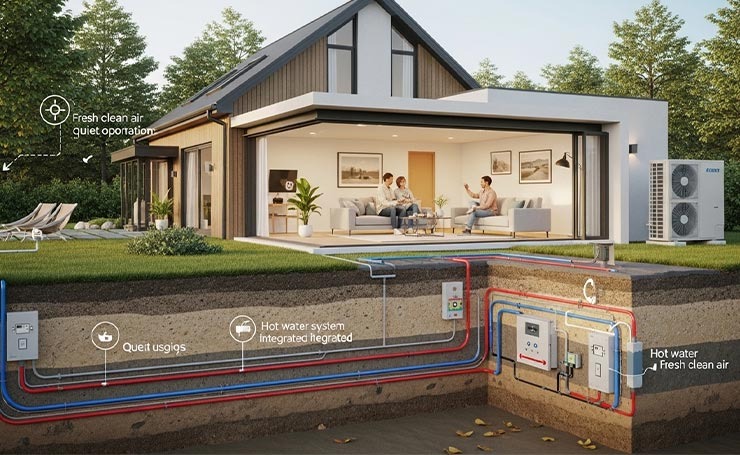
- Energy efficiency: Traditional energy-efficient HVAC systems are 95% efficient, but geothermal heating systems have an efficiency rate of 300 to 500%.
- Reduced utility bills: More efficiency means lower bills every month. Geothermal heating systems can save up to 70% on cooling, heating, and hot water bills compared to traditional systems.
- Better comfort: These systems provide comfort all year round. In winter, you do not get sudden blasts of hot air like gas furnaces do. During summer, you get consistent cool air, which is naturally dehumidified.
- Less noise: These systems do not have an outside condenser unit and do not generate noise. They are designed for quiet function, providing a peaceful environment inside and outside of your home.
- No fumes or open flame: Unlike traditional HVAC systems, geothermal heating does not use combustible fuels, like oil, propane, or natural gas. It means that there is no open flame, fumes, odors, or risk of carbon monoxide emissions.
- Free hot water: The heat used for heating and cooling can be captured to heat the water. It reduces water-heating costs for a 4-person household by 50-60%.
- Longevity: The same equipment is used for both cooling and heating, and is much easier to maintain. With fewer moving parts and no outdoor unit at risk of being damaged, geothermal systems are reliable and low-maintenance.
- Environmentally friendliness: As geothermal systems do not use fossil fuels and need very little electricity to operate, they do not emit greenhouse gases and are an environmentally conscious option.
Potential Challenges
- One of the biggest challenges of a geothermal heating system is its high initial investment.
- Effective installation requires a suitable location, but in some cases, site limitations may apply.
- There may be some technical and maintenance issues, such as pump failures and ground loop leaks. In open-loop systems, mineral deposits can build up.
- Despite being green, the drilling process and fluid reinjection can trigger small earthquakes in the area.
- The risk of drilling low-temperature, unproductive, and dry wells can waste your investment.
- Without proper maintenance, the ground surrounding the heat exchanger can become over-cooled, reducing system efficiency over time.
Is a Geothermal Heating System Right for Your Home?
Whether a geothermal heating system is suitable for you depends on several factors.
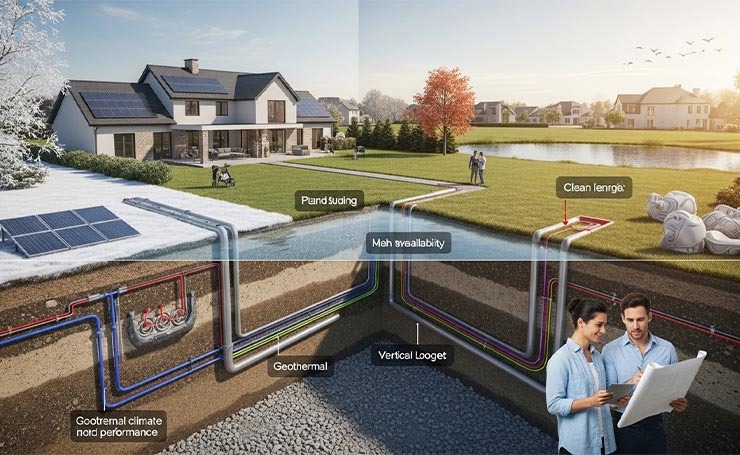
- Property Size and Land Availability: Closed-loop systems need large yard space for both horizontal and vertical loops. Pond/lake systems need access to a water body.
- Climate: Geothermal systems work exceptionally well in areas with extreme temperatures since they use stable ground temperature.
- Budget and ROI: The upfront cost is higher than traditional HVAC, but energy savings and incentives make it worth using.
- Energy Goals: If your priority is a clean home upgrade, geothermal is one of the best choices.
- Long-Term Planning: Geothermal systems last for decades and are ideal for homeowners who plan to stay in their property for the long term.
Wrapping Up
Geothermal heating systems are excellent for homeowners and small residential buildings who want eco-friendly, quiet, and efficient cooling and heating. These systems use stable underground temperatures and help you save energy, reduce bills, and even provide hot water.
To learn more about clean energy resources, visit Green Energy Insights.
FAQs
How much can I save with a Residential Geothermal Heat Pump?
On average, homeowners can cut heating and cooling costs by 50 to 70% compared to traditional HVAC systems, depending on local energy prices and system size.
Can Geothermal Systems work in Small Urban Houses?
Yes, geothermal systems can work in small urban houses, particularly vertical closed-loop systems. They generally need less land and can fit in tight spaces.
Do Geothermal Heat Pumps Need Regular Maintenance?
When it comes to geothermal heat pumps maintenance, you only need to periodically check the pump, fluid levels, and loop integrity. This makes the system low-maintenance.
How long does it take to install a Geothermal Heating System?
The installation period depends on the loop type and site conditions. However, it usually takes 1 to 3 weeks for residential properties.
