

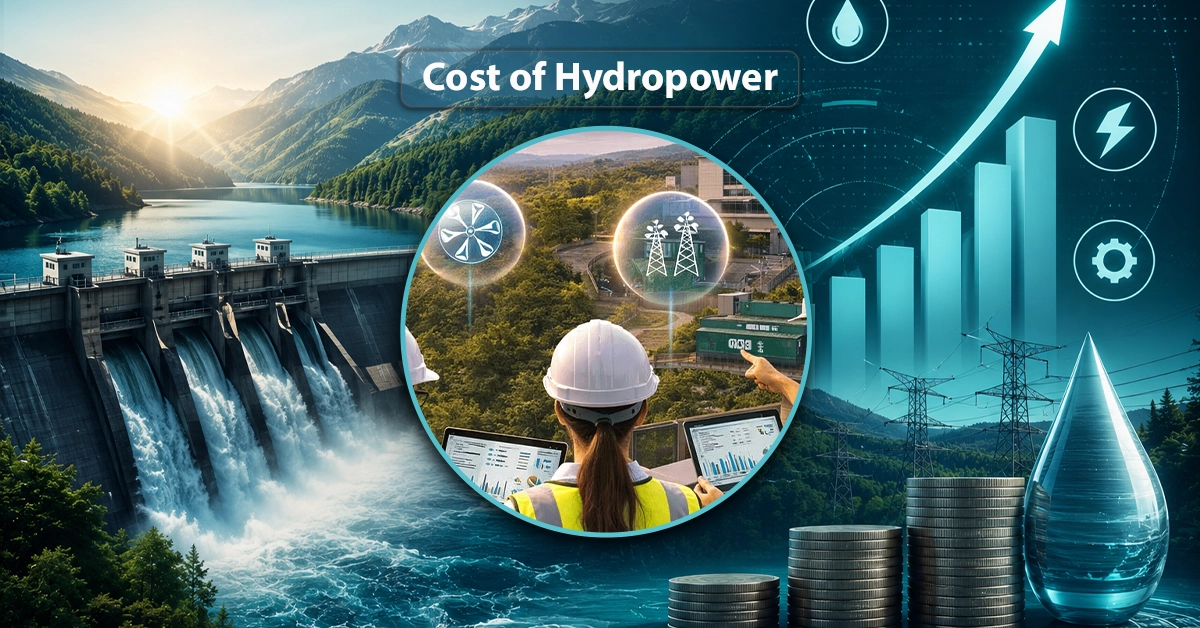
Hydropower leverages the power of moving water to generate electricity. It is hailed as a renewable energy source and reliable for electricity generation. But one thing we should know is how much hydropower costs.
In this guide, we will break down the true cost of hydropower, the factors that influence it, the levelized cost of electricity (LCOE), case studies, hidden challenges, and comparisons with the costs of other renewable energy resources.
TL;DR
- Hydropower is capital-intensive but delivers low-cost electricity for decades.
- Water availability and project location are the biggest factors that influence cost efficiency.
- LCOE for hydropower remains competitive due to its long lifespan and low operating costs.
- Retrofitting existing dams and pumped storage are shaping the future of hydropower.
What Determines the Cost of Hydropower?
The total cost of hydropower is shaped by three main components.
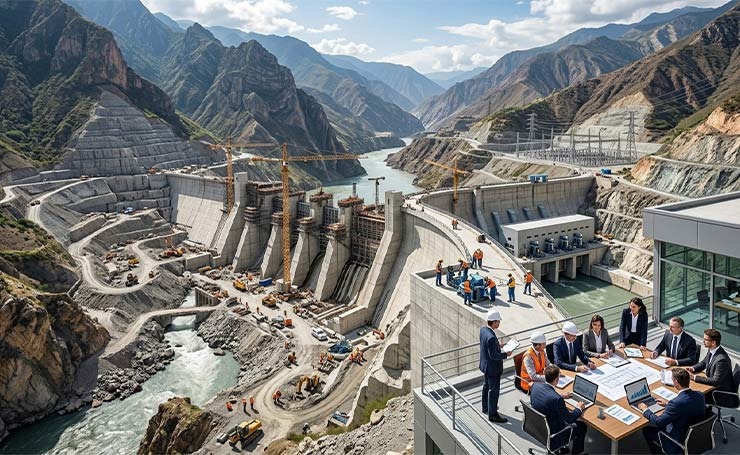
- Capital Expenditures (CAPEX): This is the largest portion of total cost, often around 70-90%.
- Operations and Maintenance Costs: These are the ongoing costs after commissioning. These are usually lower than fossil fuel plants.
- Financing Costs: These are influenced by interest rates and the Weighted Average Cost of Capital, also known as WACC. A higher WACC significantly increases the total project cost and LCOE.
Besides these, site-specific factors, such as terrain, geology, and water flow, also play a major role in determining hydropower project costs. No two hydropower projects have identical costs.
Hydropower Installation Cost per Kilowatt
The hydropower installation cost per kilowatt (kW) varies depending on the project type and location.
Typical Cost Range
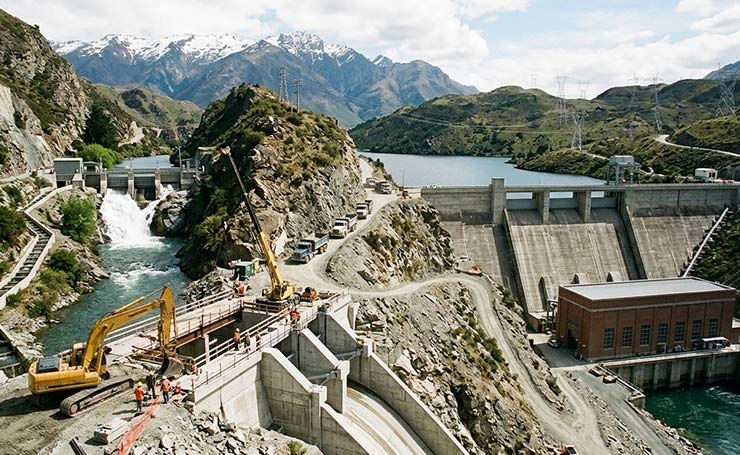
The typical hydropower plant costs around $ 1,000 to $ 6,000 per kW (global average range). Large-scale projects cost $1,500 to $3,500 per kW, while small projects can exceed $ 4,000 to $6000 per kW.
Reasons for Varying Costs
- Accessibility of the site
- Labor and material costs
- Dam-based vs. run-of-river systems
- Environmental safeguards
Projects in remote or mountainous regions tend to be more expensive due to logistics and construction challenges.
Breakdown of Hydroelectric Plant Construction Cost
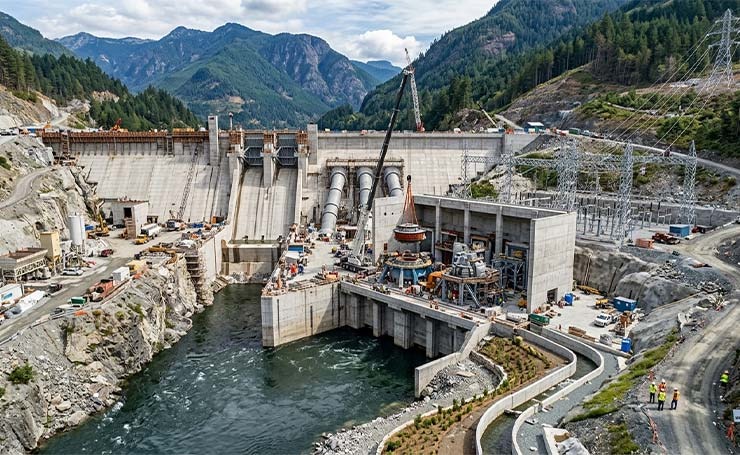
Hydroelectric construction requires substantial capital due to its scale and engineering complexity.
Major Cost Components
The major cost goes into the following.
- Civil works (40-60%): Include dams, tunnels, spillways, and reservoirs
- Electromechanical equipment (20-30%): Includes turbines, generators, and control systems
- Grid connection (5-15%): Includes transmission lines and substations
- Environmental and regulatory compliance (5-10%)
Cost Overruns: A Real Concern
Hydropower projects are particularly prone to cost overruns, mostly due to the following.
- Geological surprises during excavation
- Delays in permits and approvals
- Design changes during construction
In some cases, final costs can even exceed initial estimates by 30 to 100%.
Factors Influencing Hydropower Projects’ Costs
Several factors contribute to the overall cost of a hydroelectric project.
Construction Costs
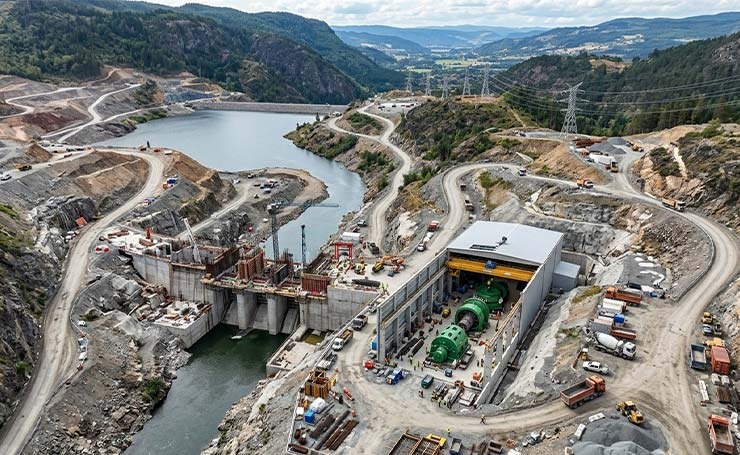
Hydropower projects require significant initial investment. Different components, such as dams, reservoirs, generators, turbines, access roads, and transmission lines, need substantial capital. The cost can range from $1,500 to $5,500 per kW of installed capacity, depending on site conditions, regional construction expenses, and project scale.
Depreciation and Lifespan
Hydroelectric projects are built to last for 65 to 100 years. This lifespan allows developers to depreciate assets over a long period and spread the initial costs across decades of electricity generation.
Environmental and Socioeconomic Costs
Building hydropower projects poses environmental and socioeconomic impacts. Developers invest in conservation of fish habitats, maintaining water flow, preserving sensitive marine species, and monitoring water quality.
Moreover, relocating communities and compensating for disruptions to land, transportation, and agriculture also entail socioeconomic costs. These factors ultimately influence overall project investment.
Water Availability and Capacity Factor
Hydropower’s electricity generation depends heavily on water flow. Projects built in locations with abundant water maximize output while reducing per-unit costs.
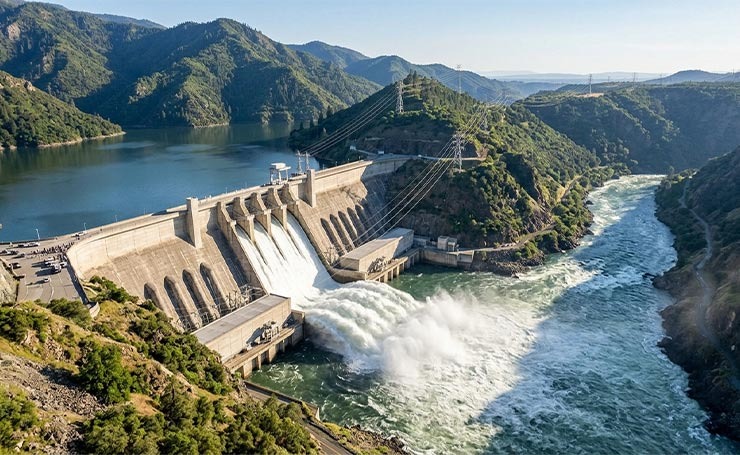
Hydropower plants should be used at their maximum capacity to produce power affordably. When a plant runs for more hours and produces more kWhs annually, it reduces the allocated share of fixed costs. As output depends on water flow’s consistency, droughts or reduced precipitation can disrupt it and raise per-kWh costs.
Operations and Maintenance (O&M) Costs
The O&M costs of hydropower are significantly lower than those of fossil fuels. However, these projects require maintenance for maximum output. These costs include facility upkeep, equipment repair, royalty fees, insurance, license, staffing, and overhead. Larger hydroelectric projects usually have lower O&M costs due to economies of scale.
Levelized Cost of Electricity (LCOE) Explained
LCOE is a metric that shows the average cost of electricity production over the entire lifespan of a hydropower plant. For large-scale projects, the levelized cost of electricity ranges from $0.02 to $0.19 per kWh. In 2022, the average LCOE for hydropower was approximately $0.061 per kWh globally. Hydropower is one of the most affordable forms of energy generation, currently at about $0.05 per kWh.
Cost Potential of Non-Powered Dams
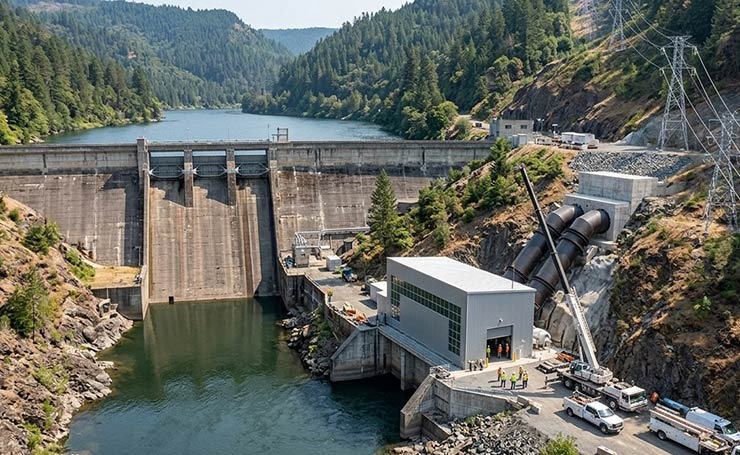
Non-powered dams are existing dams that do not produce electricity. Using these dams costs way less than building new dams. Developers can utilize the existing infrastructure, thereby reducing environmental impact. Retrofitting non-powered dams can expand hydropower capacity at a fraction of the cost.
Role of Policy and Government Support
Government support is important to build new dams or use the existing ones for maximum output. Organizations like the US Department of Energy support research and innovation and provide funding and incentives. It also has regulatory frameworks to support hydroelectric projects. These supportive policies reduce overall financing costs and improve project viability.
Real World Case Studies of Hydropower Costs
The following real-world examples will provide an estimate of how much a hydropower project costs in different scenarios.
- Brazil’s Itaipu Dam: This hydropower project was built in 1984 and supplies around 17% of Brazil’s electricity at around $0.09 per kWh. Its construction cost was estimated to be $20 billion, but regular upgrades have kept operating costs low.
- China’s Three Gorges Dam: It is the world’s largest hydropower plant. It delivered $0.04 per kWh in its early years. Its total construction cost was around $26 billion.
- British Columbia Run-of-River Plants: The independent 50MW “run-of-the-river” plants in British Columbia produce electricity at around $0.08- $0.12 per kWh.
Cost of Hydropower and Other Renewables: A Comparison
| Energy Source | LCOE (USD/MWh) | Key Cost Drivers | Reliability |
| Hydropower | $30 – $100 | High CAPEX, long lifespan, low O&M | High (dispatchable) |
| Solar (Utility-scale PV) | $20 – $60 | Falling panel costs, low O&M | Low (intermittent) |
| Onshore Wind | $30 – $70 | Turbine cost, site quality | Medium (variable) |
| Geothermal | $60 – $110 | High drilling cost, site-specific | High (baseload) |
Challenges and Hidden Costs
Initial costs of a hydropower project are only one aspect. Financial risks and hidden costs play a crucial role in determining a project’s viability and its attractiveness to private investors.
Cost Overrun and Permitting Challenge
Cost overrun is a major issue in the hydropower industry. Projects sometimes exceed their timelines and budgets, resulting in different challenges.
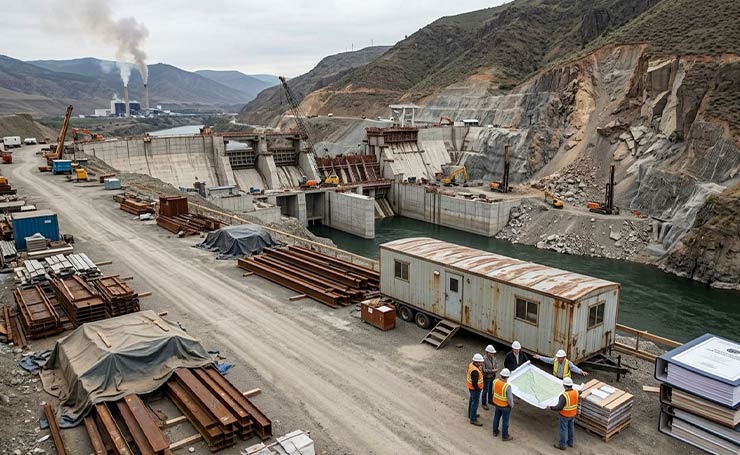
The causes of overruns include
- Engineering Complexity: Developing a plant in an unfit geological region causes complications, increasing development time and money.
- Long Project Timelines: A decade-long project faces economic shifts, inflation, and policy changes.
- Lengthy Permitting: The regulatory process is extremely slow. For instance, in the US, the duration for hydropower relicensing from 2010 to 2022 was 5.8 years. In some cases, the timeline exceeds 12 years. Every month of delay adds to uncertainty and financing costs.
When hydropower costs spiral, people opt for cheaper fossil fuel alternatives, undermining the project’s environmental goals.
Cost of Capital
Hydropower is a cost-intensive project. All of its expenses are paid upfront, followed by decades of zero-fuel costs. This makes the cost of capital an essential component of overall hydroelectric project costs.
The Weighted Average Cost of Capital (WACC) influences the final price of electricity. According to research, a 1% increase in WACC raises power generation costs by 7-14%. This is a major challenge for emerging and developing economies, where higher perceived investments lead to higher capital costs, slowing energy transition.
Offtake, Revenue, and Policy Risks
A hydroelectric project faces ongoing financial challenges even after it is developed.
- Uncompensated Services: Apart from electricity generation, hydropower also provides grid stability, flood control, and flexibility. However, these services are not compensated at all.
- Offtake Risk: Developers need to secure a long-term power purchase agreement (PPA) with a creditworthy buyer to get project financing.
- Climate Challenges: Droughts and unpredictable rainfall patterns make future revenue streams harder to predict, which can make investors nervous.
- Policy Gaps: Only a few countries have policies that directly support hydropower development. It creates an uncertain regulatory environment for long-term investments.
The solution is that more countries develop comprehensive policy frameworks that recognize hydropower’s value. Otherwise, the lack of support will continue to discourage investors.
Is Hydropower Cost-Effective in 2026 and Beyond?
Hydropower remains cost-effective, but not universally. Its value is most evident when projects are planned in the right locations, receive sufficient financing, and integrate with modern energy systems.
Best Scenarios
Hydropower delivers the strongest economic returns in regions with consistent water flow. A stable flow increases the plant’s capacity factor, which lowers LCOE by spreading fixed costs over more generated power.
Retrofitting projects for existing dams are especially attractive. As the civil infrastructure is already in place, developers avoid the most expensive portion of capital expenditures (CAPEX). This approach can reduce total project costs while also minimizing environmental and regulatory challenges.
Financing also plays an important role. Hydropower is capital-intensive; therefore, a lower WACC can improve project economics significantly. In practical terms, countries that have stable policies, access to low-interest financing, or government-backed incentives tend to see lower hydropower costs.
Future Trends
One of the most important developments in the hydropower sector is pumped storage hydropower. While it requires high upfront costs, its ability to store energy and stabilize the grid makes it valuable.
Moreover, many countries are investing in modernizing aging hydropower plants. Upgrading turbines and control systems can easily increase efficiency and output without developing new infrastructure. This approach delivers better return on investment than building plants from scratch.
Another growing trend is the integration of hybrid renewable systems. In those, hydropower works with solar or wind. For example, solar panels can produce electricity during the day, while hydropower can balance fluctuations and generate power when sunlight or wind drops. This combination improves overall system efficiency and makes better use of existing grid infrastructure.
Wrapping Up
The cost of hydropower depends on a simple trade-off: high upfront investment vs decades of low-cost electricity. While construction can be expensive and complex, low operating costs, long lifespan, and stable output make hydropower a valuable renewable energy resource.
If countries and investors think long-term, hydropower is not just affordable but also a foundation for energy sustainability and security.
Read more about hydropower on Green Energy Insights.
FAQs
What is the Average Cost to Build a Small Hydropower Plant?
Small hydropower projects usually cost between $3,000 to $6,000 per kWh. The costs depend on site conditions, grid connectivity, and civil works. Remote locations or complex terrain can push costs even higher.
Why is Hydropower Expensive to Build but Cheap to Operate?
Hydropower requires significant upfront investment in infrastructure such as dams and turbines. However, once a plant starts to operate, it has no fuel costs and needs minimal maintenance. It makes long-term electricity generation affordable.
What makes Pumped Storage Hydropower Economically Valuable Today?
Pumped storage helps store excess electricity from solar and wind and release it when needed. This grid-balancing capability makes it increasingly valuable despite its high initial cost.
Is Hydropower Affected by Climate Change and Droughts?
Yes, changing rainfall patterns and droughts can reduce water availability, which in turn reduces electricity generation and increases per-unit costs. This makes long-term climate assessment important for project planning.
