

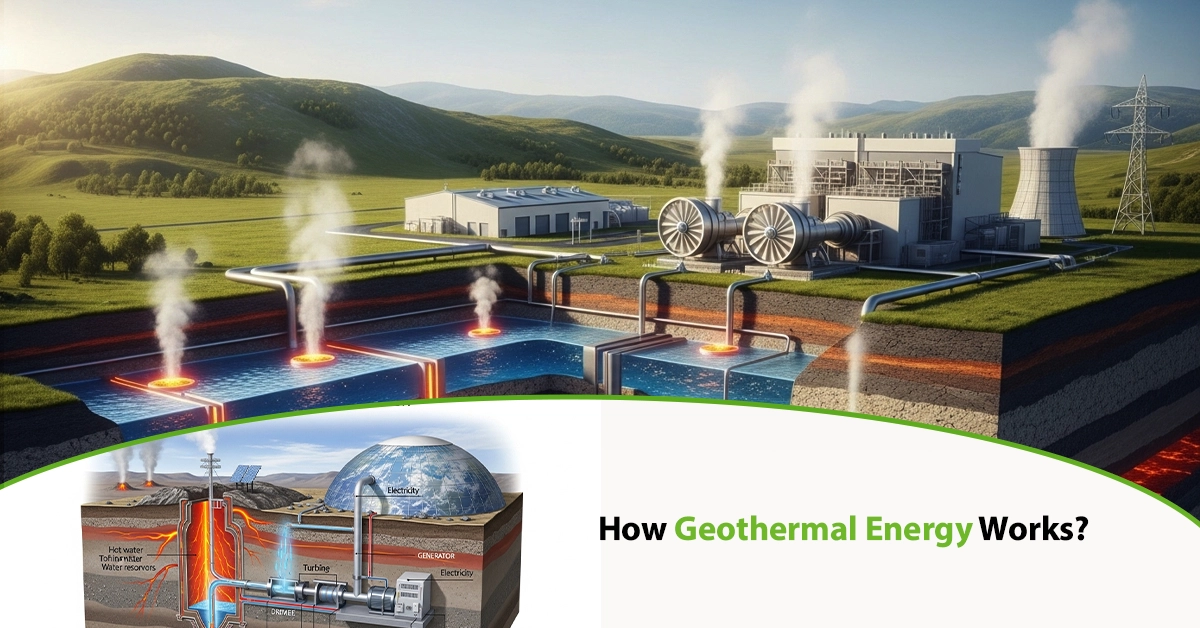
Earth has continuously generated heat since its formation 4.5 billion years ago. This heat moves steadily and slowly towards the surface of the planet. Geothermal energy is simply our way of putting this heat to use.
This guide focuses on how heat moves underground, how we extract it, and how it becomes useful.
Key Takeaways
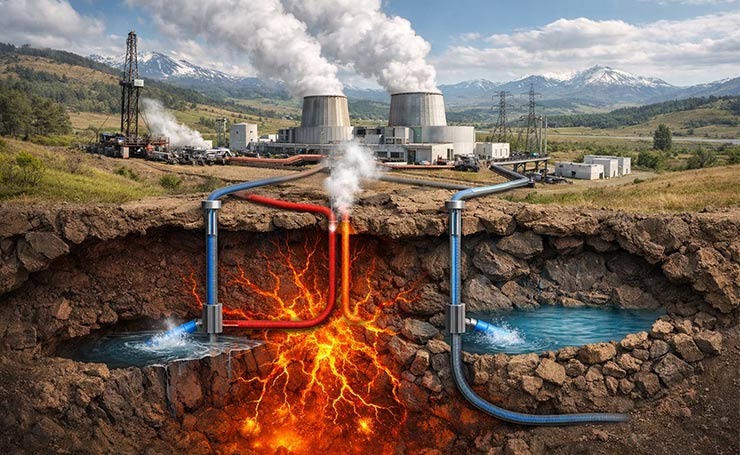
- Geothermal energy works by sending Earth’s internal heat through water to the surface to generate electricity or direct use.
- Enhanced Geothermal Systems (EGS) can help with geothermal energy extraction almost anywhere.
- Reinjection and reservoir management are important for sustainability and long-term performance.
Where Earth’s Internal Heat Comes From
The heat of Earth’s mantle is already moving towards the surface. Roughly every 100 meters underground, temperatures increase by 3°C on average, though it varies geographically. At accessible drilling depths, you find hot water and rocks that are used to generate electricity or to heat buildings directly.
This heat concentrates in underground rock formations. The water accumulates in the porous rocks and absorbs heat from the surrounding geology and becomes pockets of superheated water and steam, making geothermal extraction practical. Let’s understand it in detail.
The Geothermal Energy Cycle: Step by Step
1. Heat Storage Beneath the Surface
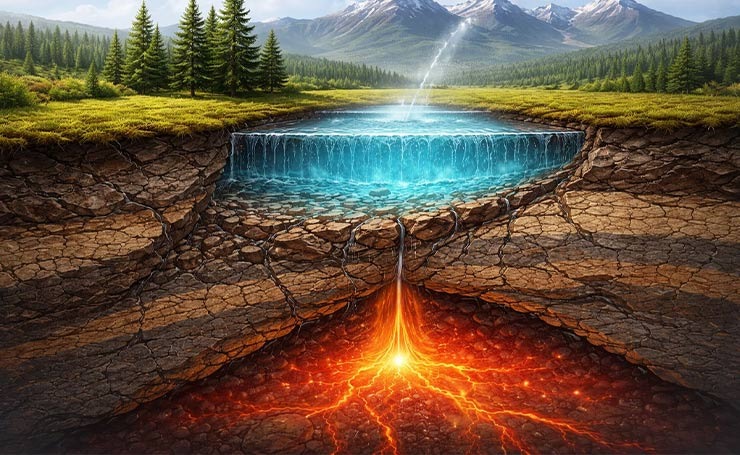
Rock formations under the Earth’s surface store immense amounts of thermal energy. Fractured and porous rocks let water infiltrate and accumulate over time. It creates a geothermal reservoir. It becomes a sort of natural pressure cooker, where heat and water have nowhere to escape.
2. Heating of Underground Water
As groundwater comes into contact with hot rocks, it absorbs heat conductively. Depending on depth and location, the water temperature can rise above 150°C. However, it remains liquid due to the pressure of overlying rock and water. In some zones, it converts partially or fully into steam.
3. Extraction Through Production Wells
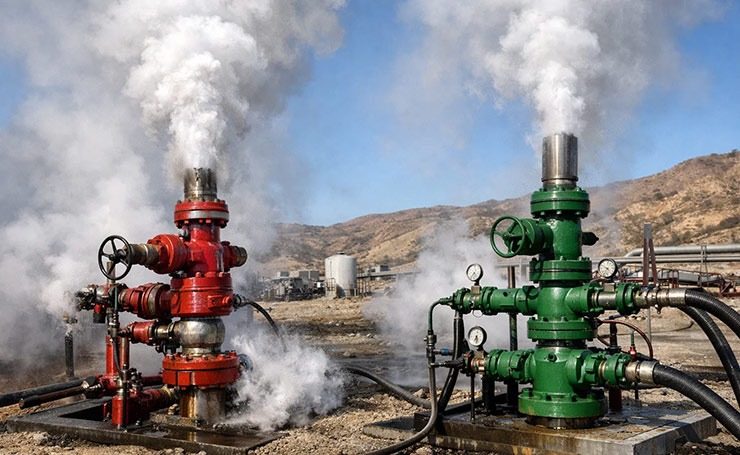
To create a path for the heated water to travel upward, wells are drilled into reservoirs. The liquid rises naturally due to a pressure differential. Operators control flow rate and pressure through wellhead equipment.
4. Energy Conversion at the Surface
Once at the surface, the steam is either extracted directly or separated from hot water. It is then directed to spin turbines to generate electricity. After energy extraction, the now-cooled water is not wasted. It is injected back into the reservoir through wells to maintain pressure and keep the cycle running.
Understanding Geothermal Reservoirs
Every geothermal reservoir looks different underwater. Natural hydrothermal reservoirs combine three components: heat, water, and permeability, meaning the rock allows water to flow through it freely. These are the best to work with and form the basis of operational geothermal plants today.
Fluid movement and extraction become difficult where permeability is low. This is why reservoir management is necessary. Operators monitor pressure, fluid levels, and temperature over time to prevent resource damage and depletion. A well-managed reservoir can sustain energy production for decades, while a poorly managed one can decline rapidly.
Direct Use: Using Heat Without Generating Electricity
Not all geothermal applications involve generating energy. In most cases, the heat is the product.
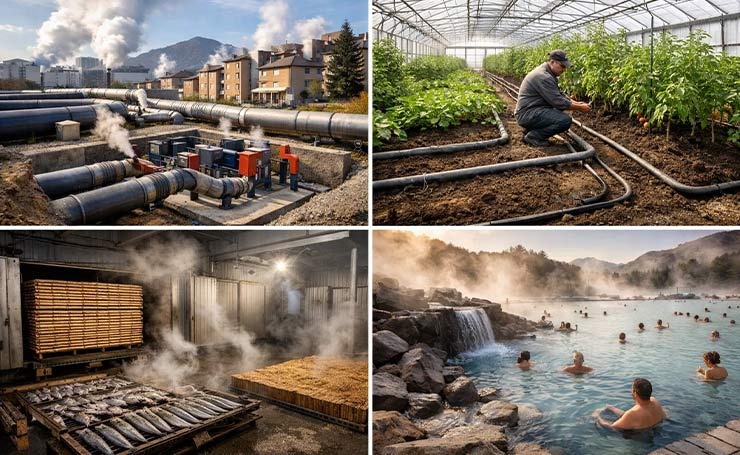
District heating is one of the most common examples of this. The geothermally heated water is piped directly into the residential and commercial heating networks, transferring warmth through heat exchangers before the cooled water returns underground.
In agriculture, this heat is used to warm greenhouse soil and air to extend growing seasons in cold climates. The procedure is the same. Hot water runs through pipes embedded in the soil or circulated through greenhouse systems, releasing warmth without combustion.
Industrial operations use geothermal heat for drying purposes, such as timber, fish, grains, and other agricultural products. Food processing facilities use this heat in the same way they would use a gas-fired heat, but without emissions.
Thermal spas also use it, where naturally heated water rises to the surface or is gently extracted for bathing and other therapeutic purposes.
How Geothermal Water Supports Building Climate Control
To understand how geothermally heated water supports the climate, we need to understand the geothermal pump system.
Geothermal Heat Pump Systems Explained
Even where Earth is not significantly hot, it is moderately temperate. A few meters below the surface, ground temperature stays relatively stable the whole year. In most regions, it is between 10°C and 16°C, regardless of what is happening above ground.

Geothermal heat pump systems use this stability through a loop of fluid-filled underground pipes. In cold weather, the fluid soaks up heat from the ground and carries it into the building, where a heat exchanger concentrates and distributes it. In summer, this process reverses: excess heat from the building flows to the cooler ground, providing air conditioning.
These systems are more efficient than conventional HVAC because they do not generate heat; instead, they move it. Moving heat from a stable source into a building requires much less energy than generating it from scratch using electricity or combustion. The geothermal heat pumps are 3 to 5 times more efficient than traditional systems.
Enhanced Geothermal Systems (EGS)
Most of the Earth’s underground heat does not come from a water-filled reservoir. Hot dry rock with immense thermal energy but no natural fluid pathway is more common.
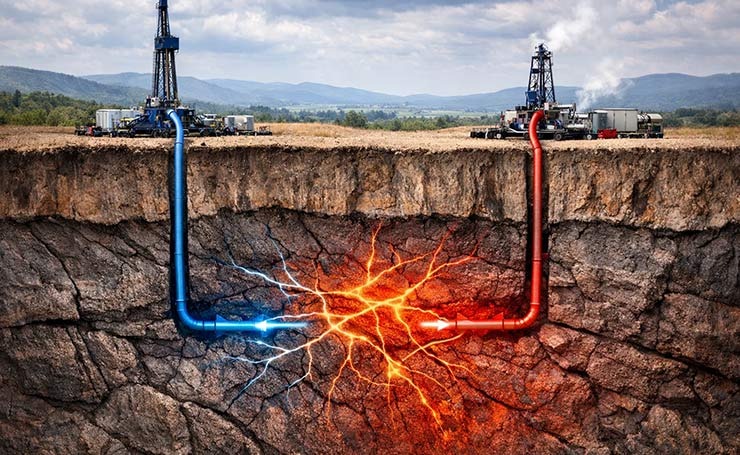
Enhanced Geothermal Systems (EGS) address this by creating a reservoir rather than finding one. Water is injected into hot dry rock at depth, which opens and expands its existing fractures. A second well, positioned to divide this fracture network, then extracts the heated water back to the surface.
The result is an artificial fluid circulation loop through hot rock that mimics the natural hydrothermal reservoirs, but in locations where they did not exist. EGS significantly expands the geographic reach of geothermal energy, making it useful almost everywhere.
Reinjection and Sustainability: Keeping the System Renewable
Reinjected fluid is what separates a responsibly managed geothermal system from poorly managed ones. After the water has given up its heat at the surface, it is pumped back into the reservoir rather than being discharged or lost.
This serves two functions. First, it maintains reservoir pressure, which allows the fluid to reach the surface in the first place. Without reinjection, the pressure drops and the reservoir declines. Second, returning water to the reservoir replenished the fluid that carries heat upwards, sustaining the thermal cycle for a long time.
Common Challenges in Harnessing Geothermal Heat
While geothermal energy is reliable, harnessing it poses some technical challenges.
Mineral Scaling
Mineral scaling is a common issue. Geothermal fluids have dissolved minerals that can precipitate and build up inside pipes, valves, and heat exchangers. Calcium carbonate and silica are common minerals.

Corrosion is also a problem because hot, mineral-rich, and sometimes acidic fluids are chemically aggressive toward metal infrastructure.
Reservoir Pressure Management
This challenge also needs continuous attention. When operators over-extract fluid faster than it can be naturally or artificially replenished, it leads to pressure drops, reduced flow, and eventually declining production. Reinjection helps, but the balance should be monitored properly.
Site Suitability
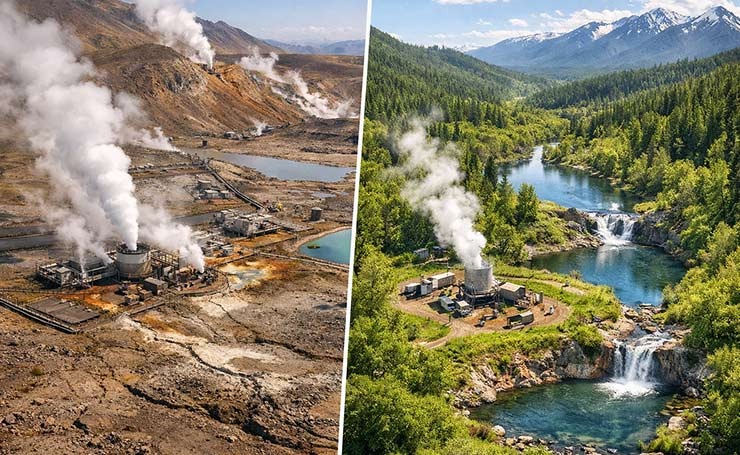
Site suitability is a constraint when it comes to extraction. Not every location has the right combination of heat, water, and permeability to make extraction practical or economical, even with EGS expanding the possibilities.
Induced Seismicity
It is another major concern, particularly with EGS operations. When the fluid under pressure is injected into rock, it can trigger small earthquakes. Modern projects monitor seismic activity continuously and adjust injection parameters to stay within acceptable limits.
Wrapping Up
This guide covered how geothermal energy works in detail. Geothermal energy follows a consistent logic: the heat moves from deep rock into water, water moves toward the surface, and at the surface, that energy is converted into direct heat or electricity.
Geothermal is valuable due to its reliability. Unlike solar or wind, it does not depend on weather or time of day. The Earth’s core heat is constant, and systems that use it can run around the clock.
For more information on geothermal energy, make sure to visit Green Energy Insights.
FAQs
How does Underground Water become hot enough for Geothermal Extraction?
Groundwater absorbs heat from superhot rocks underground and remains pressured, creating reservoirs of superheated water or steam.
Why is Reinjection Important for Sustainable Geothermal Energy Production?
Reinjection is important to maintain underground pressure and replenish the water that carries heat, ensuring long-term system productivity.
Does Geothermal Energy Extraction cause Earthquakes?
Yes, small seismic events do occur, particularly with EGS projects. However, monitoring and controlled injection practices reduce risks.
What is the difference between Geothermal Electricity Generation and Direct Heat Use?
Geothermal electricity generation means using underground steam and water to spin the turbine attached to a generator. Direct heat use transfers geothermal heat directly for district heating, agricultural, industrial uses, and thermal spas.
