

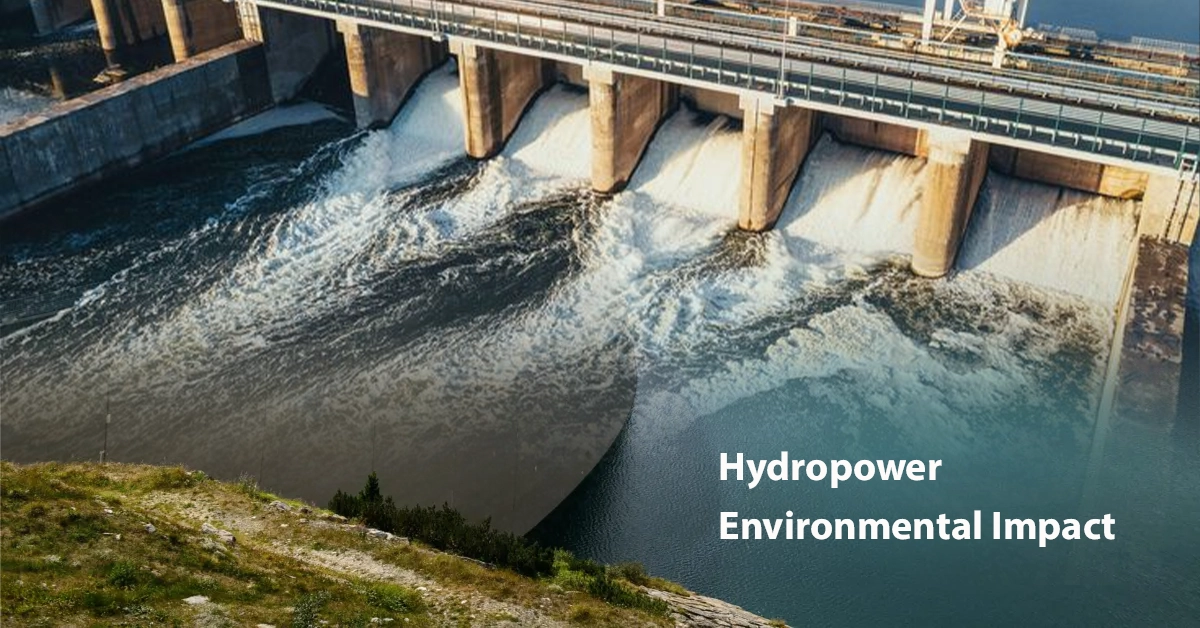
The hydropower environmental impact is a set of ecological and social effects. It is a type of renewable energy and is often termed as clean energy as well. However, it still carries some significant environmental challenges that vary by project design, scale, and location.
The impacts of larger projects are significant. Around 60% of the world’s rivers have dams. In Europe, these barriers have contributed to a 93% decline in the migratory fish population since 1970.
But the good news is that it can be changed. Several emerging technologies, such as fish-friendly turbines and run-of-river designs, make hydropower truly sustainable.
In this guide, we take you through the environmental effects of hydropower and its solutions.
TL;DR
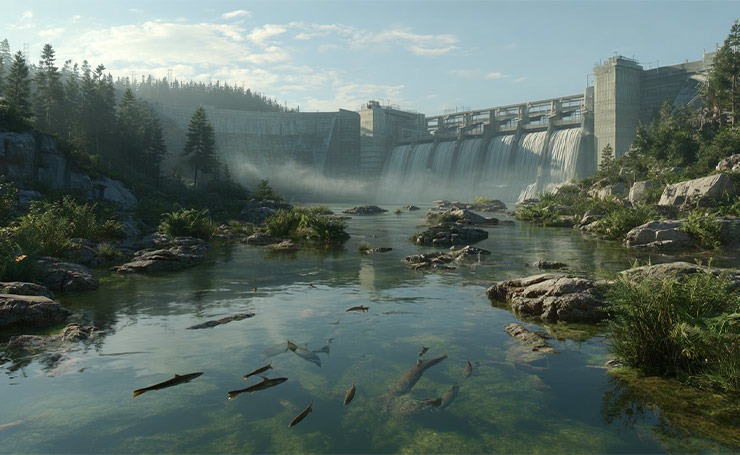
- Hydropower is renewable, but larger dams can significantly disrupt ecosystems and biodiversity.
- Major environmental issues include blockage of fish migratory passages, sediment trapping, river fragmentation, and greenhouse emissions.
- Innovative technologies, such as run-of-river systems and fish-friendly turbines, can significantly reduce environmental damage.
- Modern engineering, careful siting, and smart planning are important to making hydropower more sustainable.
Environmental Impacts of Hydropower
Here are some negative effects of hydropower.
Use of Land
The size of the reservoir created for a hydropower project varies significantly depending on the capacity of the hydroelectric generators and the land’s topography. Usually, more land is required for projects in flat areas than in hilly regions or canyons, where deeper reservoirs hold more water in a smaller space.
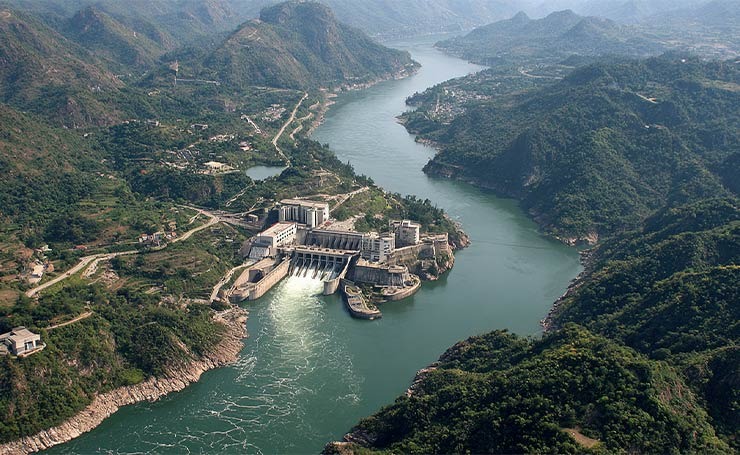
For instance, the large Balbina hydropower plant was built in a flat area. It flooded around 2,360 sq km and only provides 250 MW of power-generating capacity. On the other hand, a small 10 MW run-of-river plant in a hilly area can use only 2.5 acres of land.
Moreover, flooding an area for a hydroelectric plant has drastic impacts too, such as the destruction of forests, wildlife habitats, scenic areas, and agricultural land. In China, entire settlements had to be relocated to construct the Three Gorges Dam reservoir.
Alerting River Ecosystems
A hydropower dam places a barrier across a river and disrupts its natural flow. Rivers are dynamic and flow in an interconnected network. However, a dam reshapes its entire landscape, influencing both upstream and downstream.
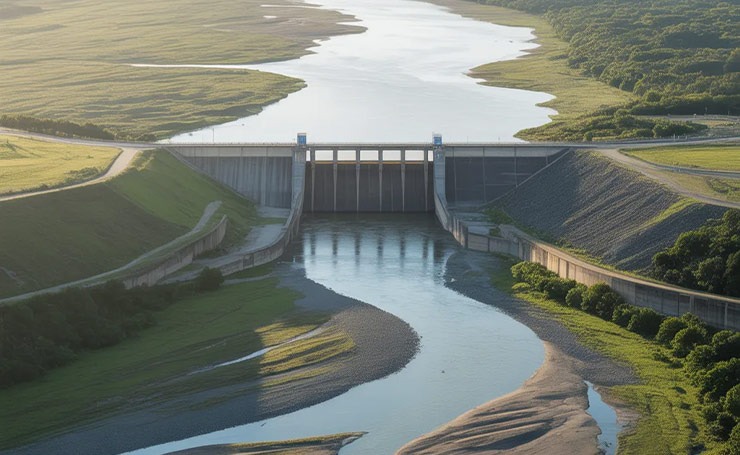
Upstream, the river becomes a still-water reservoir due to the barrier. Lake-dwelling species start favoring it instead of native river species. Downstream, the river’s natural ebb and flow is altered to intermittent releases to meet controlled energy demand. It alters water flow patterns and temperature.
One of the most negative effects of hydropower on ecosystems is sediment trapping. The dam blocks the natural transfer of soil, silt, and other organic matter that is important for downstream beaches, deltas, and floodplains. Sediment keeps accumulating behind the dam, resulting in a reduction in the reservoir’s capacity. As sediment does not reach downstream, it results in eroded riverbanks and disappearing coastal wetlands.
Impact on Aquatic Life
Hydropower is an existential threat to aquatic life. The biggest risk is hydropower fish migration disruption. Since 1970, the barriers caused by dams have reduced the migratory fish population to 93%. Due to long rivers being fragmented by dams, populations of fish species like salmon and sturgeon have collapsed due to blocked spawning grounds.
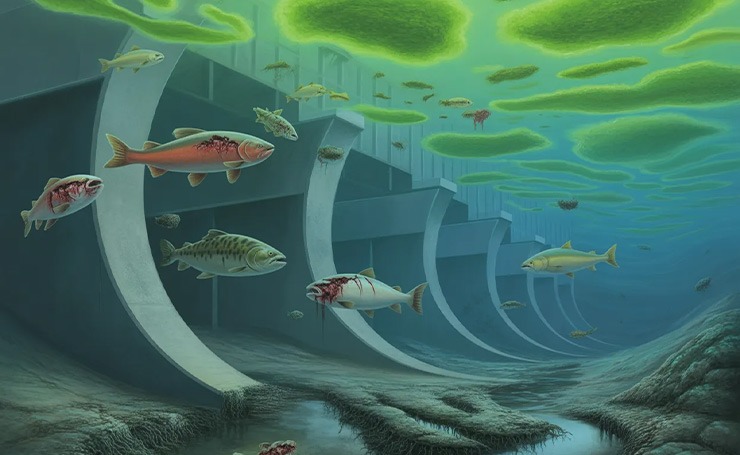
Apart from blockages, turbines are also extremely dangerous to marine life. Fish pulled through the blades have a high mortality rate of 5% to 30% due to pressure changes and physical strikes. If a river has multiple dams, this mortality rate increases, destroying a large part of the fish population over time.
Water quality changes are another concern. In deep reservoirs, water separates into layers, with cold, deep water having little to no oxygen. This is where decomposition happens. However, when dams release this cold and oxygen-depleted water, it harms and even kills marine life that need oxygen-rich water. Not only that, but this cold water also disturbs fish growth, insect life cycles, and food chains.
The balance of nutrients is also affected, resulting in algae growth (algal blooms). These blooms use even more oxygen, making things worse for aquatic life.
Full-Cycle Emissions
Hydropower’s “clean energy” label is being re-examined due to its life-cycle emissions. While emissions are minimal during construction, the real issue is the greenhouse gases that can accumulate in the reservoir.
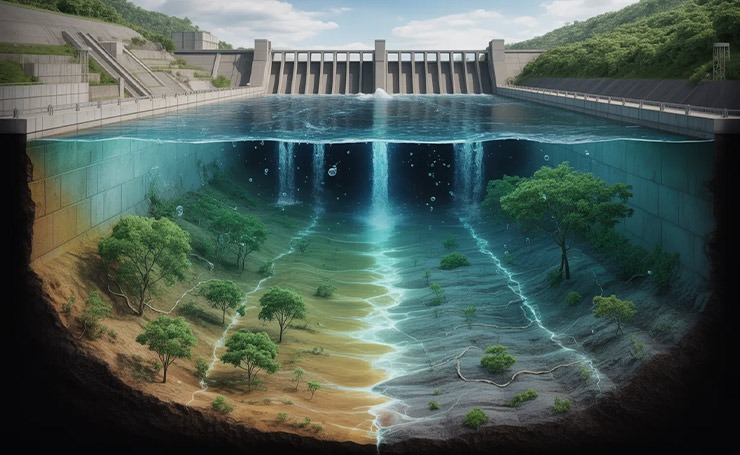
When an area is flooded, the submerged vegetation and soil begin to decompose. At the bottom of the reservoir, where oxygen is minimal, this anaerobic decomposition produces both methane and carbon dioxide.
Methane, a greenhouse gas, retains heat more effectively than carbon dioxide over short timescales. When it bubbles to the surface, it releases powerful global warming gas.
The amount of gas depends on the location. Tropical reservoirs tend to produce higher emissions because they contain more organic matter, and warm temperatures accelerate decomposition. Temperate reservoirs in cooler regions typically produce fewer emissions due to less organic matter and slower decomposition.
Greenhouse gas emissions are usually highest in the first few years after flooding and decline over time.
Minimizing The Environmental Impact
The environmental impact of hydropower is immense. However, we are leaving behind the old ways and adapting emerging technology to solve them. The future of hydropower depends on balancing energy needs with ecological preservation. The new technology is making this balance achievable.
Run-of-river Hydropower vs Dams
The type of facility plays a huge role in environmental impact. Large dams with reservoirs provide flood control and generate more power; however, they have a significant environmental impact. The impacts include river fragmentation, blocked sediment flow, extensive land use, and, in tropical areas, significant methane emissions.
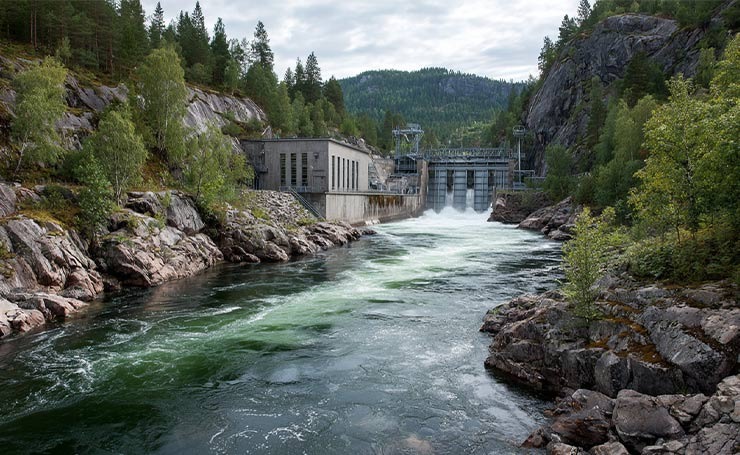
On the contrary, run-of-river plants divert only a portion of the river’s natural flow through the canal, tunnel, or a pressurized pipe called a penstock. Their land usage is less, and emissions are also the lowest out of all energy sources. One thing to keep in mind is that their power generation changes with river flow. However, run-of-river projects have a significantly lower overall environmental impact.
Role of Technology
Innovative technology is proving to be extremely powerful in mitigating environmental concerns associated with hydropower. Here are some emerging technological advancements.
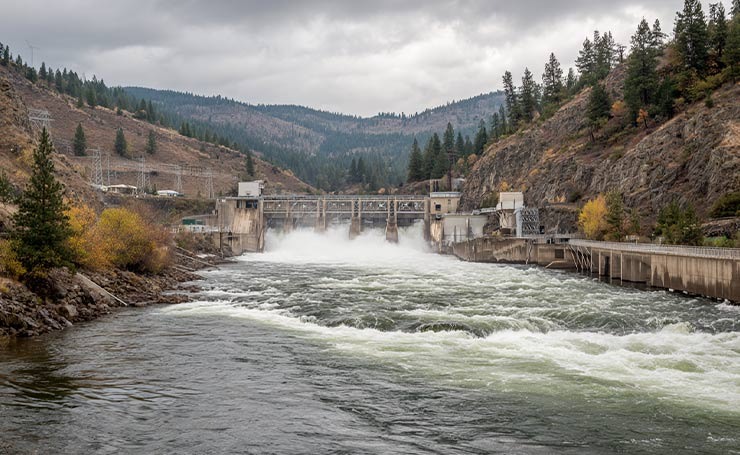
- Sediment Management: New techniques include bypass tunnels construction and sluicing during high flows. These will help move sediment downstream, maintain reservoir capacity, and save habitats.
- Natural Flow Simulation: Operational models can now simulate a river’s natural flow. They control water releases to maintain downstream ecosystems and aquatic life.
- Advanced Fish Passages: These systems include trap-and-haul, elevators, and pressurized salmon cannons that help migratory species bypass barriers easily.
- Fish-friendly Turbines: Advanced turbine designs have slower blade speed and enable smoother water passage to reduce fish mortality rate from 15% of traditional turbines to 2% or even less.
Strategic Operation
Technology is a part of a strategy. The most sustainable hydropower projects are all about smart planning, siting, design, and operation from the get-go.
Careful site selection is critical. Using system-scale planning to identify sensitive regions and important migratory routes helps prevent irreversible damage. Moreover, pairing retrofitting existing dams with modern technology is also better than constructing new dams.
Using real-time data and AI can also optimize water release for ecological health. In some cases, removing the outdated dam infrastructure is the best way to restore a river.
Final Thoughts
Hydropower’s environmental impact is a serious concern. While it is a renewable energy source, it also causes river fragmentation, a decimated fish population, and greenhouse gas emissions. Fortunately, new technology (fish-friendly turbines, run-of-river designs) and responsible planning are making hydropower sustainability achievable.
Learn more about sustainable energy by visiting Green Energy Insights.
FAQs
How does Hydropower Affect River Ecosystems in Upstream and Downstream Areas?
Hydropower changes river behavior on both sides of the dam. Upstream, water slows down and forms a reservoir, which is favored by still-life water species. Downstream, water flow becomes controlled and irregular, disrupting sediment movement, nutrient flow, and temperature balance. These disruptions affect aquatic life and river health.
Can Hydropower be Considered 100% Environmentally Friendly Energy Source?
No energy source is completely impact-free. Hydropower produces very low operational emissions, but it also has an environmental footprint that includes habitat destruction, methane emissions from reservoirs, and disruption of aquatic ecosystems. So, no, hydropower cannot be considered 100% environmentally friendly.
Why do Hydropower Reservoirs Emit more Greenhouse Gases in Tropical Regions?
Tropical reservoirs have organic material and higher temperatures, which speed up decomposition. This leads to higher methane and carbon dioxide emissions compared to cooler regions.
