

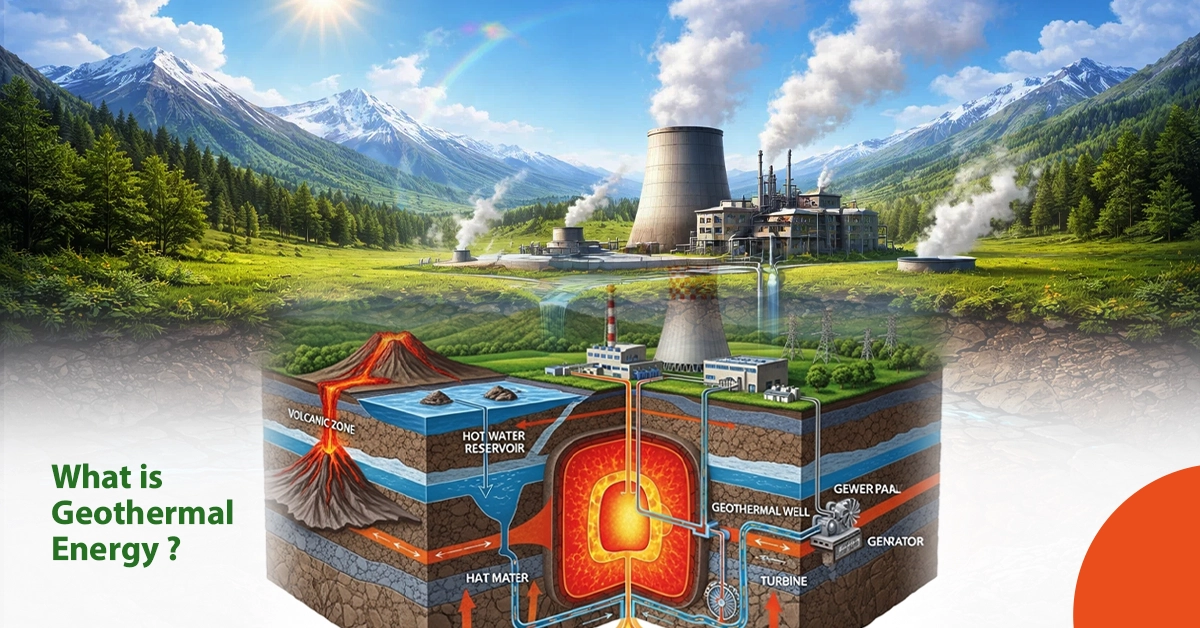
As you go deeper into Earth’s soil, the underground rock and water become hotter due to geothermal energy. This heat has been present since Earth’s origin, meaning for billions of years.
From heating your houses to generating electricity, this energy offers sustainable living solutions. In this guide, let’s explore what geothermal energy is in detail.
30-Second Summary
- Geothermal energy comes from the heat of Earth’s core and is used for electricity generation and heating and cooling of buildings.
- It is weather-independent, is available 24/7, and has extremely low greenhouse gas emissions compared to fossil fuels.
- Despite its modest growth, experts believe that it will become an important component in the renewable energy mix very soon.
What is Geothermal Energy?
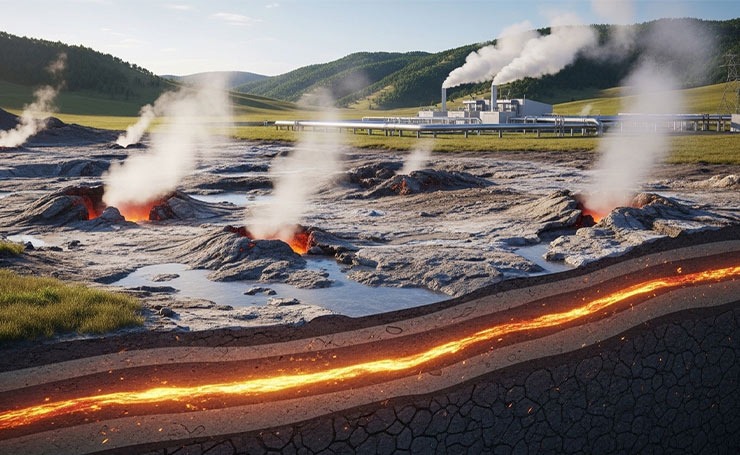
Geothermal energy comes from Earth’s core. The word geothermal has Greek roots; geo means Earth, and thermal means hot. Unlike wind and solar energy, which depend on favorable weather conditions, geothermal energy is always available.
How is Geothermal Energy Produced?
Geothermal energy comes from the heat produced within Earth’s core. This heat moves toward the surface and warms underground rocks and water. This heat is produced due to Earth’s molten core, the slow radioactive decay of minerals, and heat trapped during the planet’s formation.
How Does Geothermal Work?
For geothermal power production, wells are drilled to reach underground hot water and steam reservoirs. These wells bring water and steam to the surface, where they are used to drive turbines that power electricity generators.
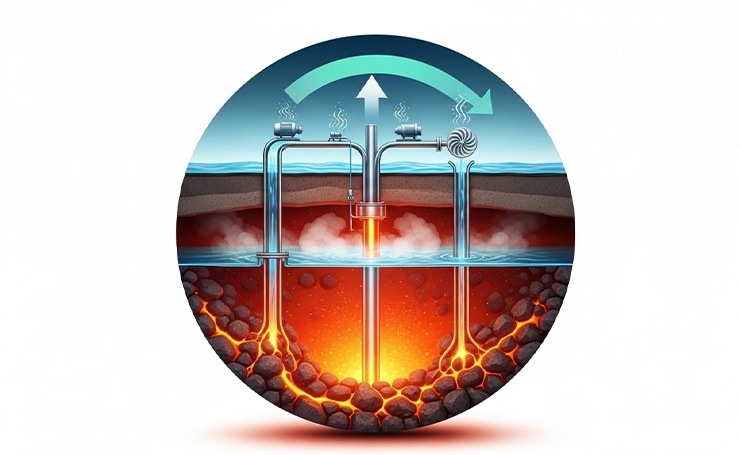
The cooled water is returned to the Earth through an injection well to maintain reservoir pressure and temperature, creating a sustainable cycle.
Types of Geothermal Energy Systems
Here are the most common geothermal energy systems.
Geothermal Power Plants
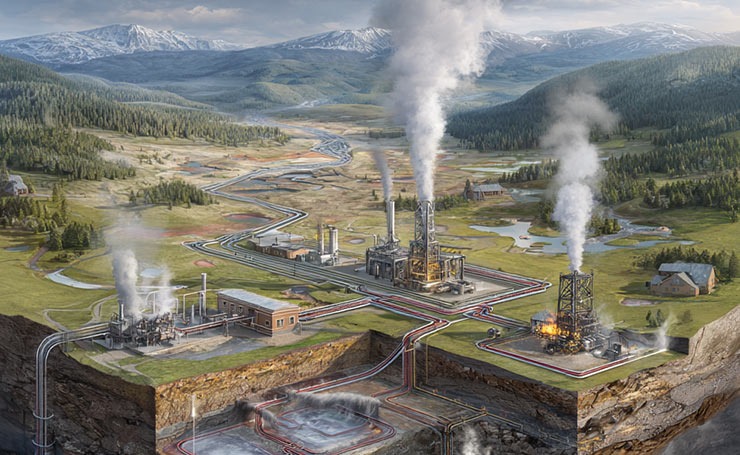
- Flash Steam Plants: These plants take high-pressure hot water from underground and transform it into steam to drive turbines.
- Dry Steam Plants: These plants use steam directly from geothermal reservoirs to power turbines.
- Binary Cycle Plants: These move heat from warm underground water to another liquid that boils at a lower temperature. This second liquid vaporizes and drives turbines.
Direct Use Applications
These systems use hot water directly from geothermal reservoirs for heating buildings, spas, and other industrial processes without generating electricity.
Geothermal Heat Pumps
- Closed-Loop Systems: These systems use sealed underground pipes filled with water or special fluid. These pipes are placed vertically, horizontally, or in a pond or lake. The liquid flows through the pipes, drawing heat from the ground in winter and releasing excess heat back into the earth in summer to properly heat and cool buildings.
- Open-Loop Systems: These systems pump groundwater directly from a well through the heating system and discharge it back into the ground.
Uses of Geothermal Energy
Geothermal energy is used for multiple purposes.
Power Generation
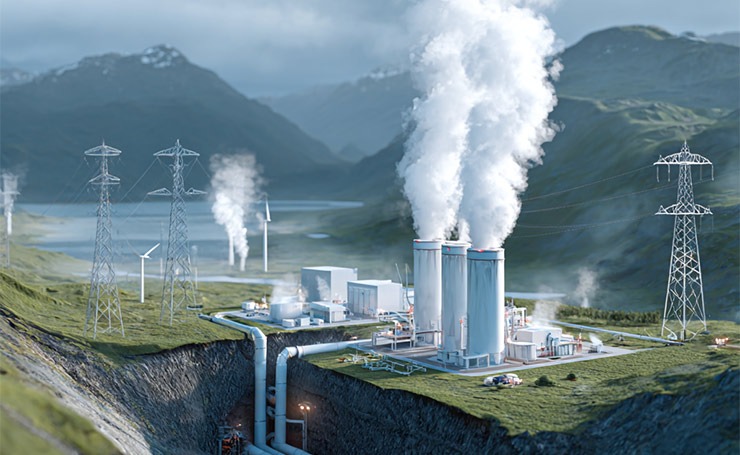
Geothermal energy is a stable power source that provides a constant supply of energy to systems. It is particularly important to balance the inconsistent nature of other renewable resources, like wind and solar energy. Geothermal power plants can steadily supply electricity continuously using consistent heat from Earth’s core.
Direct Uses
Direct uses of geothermal energy mean using it without converting it into electricity. Here are some practical applications of it.
- Industrial Processes: Many industrial processes require heat to operate, and geothermal energy can provide it, including food processing, pasteurization, and other manufacturing operations.
- Agriculture: Geothermal is used in many agricultural activities, such as soil and greenhouse heating. It lessens energy costs and improves crop production.
- District Heating: This energy source powers district heating systems, providing centralized heating for residential and commercial buildings.
- Recreational Uses: Geothermal power is also used for many recreational activities, like heating spas and swimming pools, to provide therapeutic benefits.
Advantages of Geothermal Energy
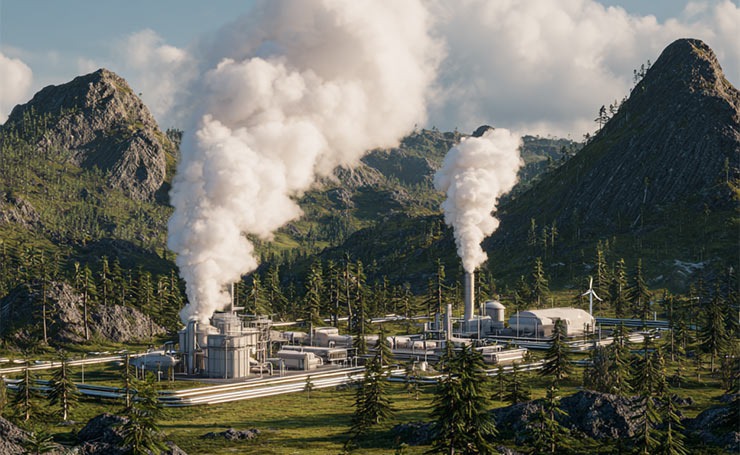
- Geothermal energy emits very small amounts of carbon dioxide and greenhouse gases, unlike fossil fuels.
- It is a sustainable, renewable energy source because the Earth continuously produces it.
- Geothermal energy is present round the clock, unlike solar and wind energy.
- It has a small land footprint. Facilities require less land compared to other power plants.
- It provides cost efficiency over time. Although the initial installation cost can be a lot, the operating costs are low.
Disadvantages of Geothermal Energy
- The high upfront costs of geothermal projects make them financially risky. Companies find them less attractive than other energy sources.
- Geographical limitation is another issue. High-temperature geothermal resources are mostly found in regions with volcanic activity or tectonic plate boundaries, limiting them to specific areas.
- There are some environmental concerns as well. Improper management may release underground gases or minerals.
- Excessive extraction without reinjection can cause the ground to sink, posing a major risk of land subsidence.
- Geothermal energy needs proper resource management. Reservoir pressure must be maintained for sustainability.
Where is Geothermal Energy Used Around the World?
The following countries lead in geothermal energy production due to favorable geographical conditions.
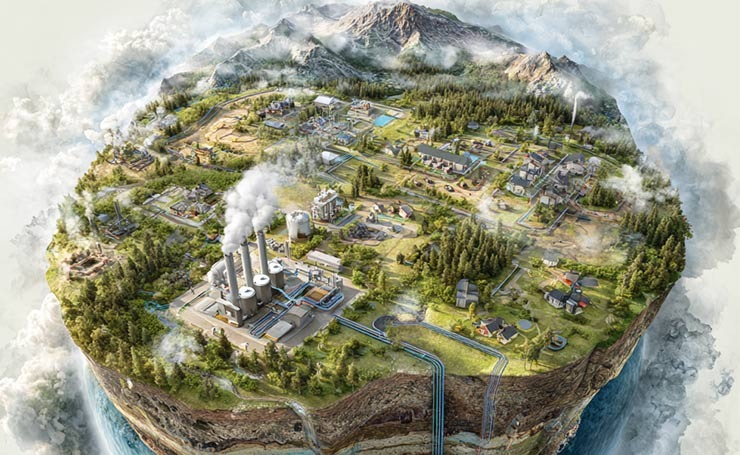
- In Iceland, nearly all homes use geothermal energy.
- The United States is the largest producer of geothermal energy.
- The Philippines also relies heavily on geothermal power.
- Indonesia has vast untapped geothermal potential.
- Kenya is one of the African countries where geothermal use is expanding rapidly.
Environmental Impact of Geothermal Energy
Geothermal energy is considered environmentally friendly; however, there are some impacts to consider.
- Air Emissions: While the gas emissions are lower than those of fossil fuels, geothermal energy may still release hydrogen sulfide, carbon dioxide, ammonia, and methane.
- Water Quality and Usage: Subsurface liquid can contain large amounts of arsenic, mercury, and boron. Improperly reinjecting fluids into the earth can pollute local water sources.
- Induced Seismicity: When fluids are injected into geothermal reservoirs, they can trigger small earthquakes. They are generally harmless but can pose risks in certain areas.
Geothermal Energy vs Other Renewable Energy Sources
| Feature / Factor | Geothermal Energy | Solar Energy | Wind Energy | Hydropower |
| Energy Source | Heat from the Earth’s interior | Sunlight | Moving air/wind | Flowing water |
| Availability | 24/7, constant base load | Daytime only, weather-dependent | Intermittent, depends on the wind | Seasonal / flow-dependent |
| Land Use | Small footprint | Large areas needed | Moderate, wind farms | Large reservoirs may be required |
| Initial Cost | High (drilling, plants) | Moderate to high | Moderate | High (dams, infrastructure) |
| Operating Cost | Low | Low | Low | Low |
| Carbon Emissions | Very low | Very low | Very low | Low (except during construction) |
| Lifespan | 20–50+ years | 25–30 years | 20–25 years | 50–100 years |
| Scalability | Limited to suitable locations | Highly scalable | Highly scalable | Site-specific, large-scale |
| Reliability | Very reliable, stable output | Variable | Variable | Reliable but seasonal |
| Energy Density | High | Low to moderate | Low | High |
| Maintenance | Moderate | Low | Low | Moderate |
| Best Use | Base-load electricity, heating/cooling | Distributed electricity, rooftops | Grid electricity, offshore/onshore | Large-scale electricity, irrigation, and flood control |
The Future of Geothermal Energy
Geothermal energy will play a bigger role in the world’s clean future than it does today. Currently, it accounts for a small share of global power capacity; experts believe its share will grow rapidly as the technology improves and unlocks new geothermal resources.
Growing Capacity and Declining Costs
Geothermal power plants are already in use. But the technology and drilling methods are becoming better.
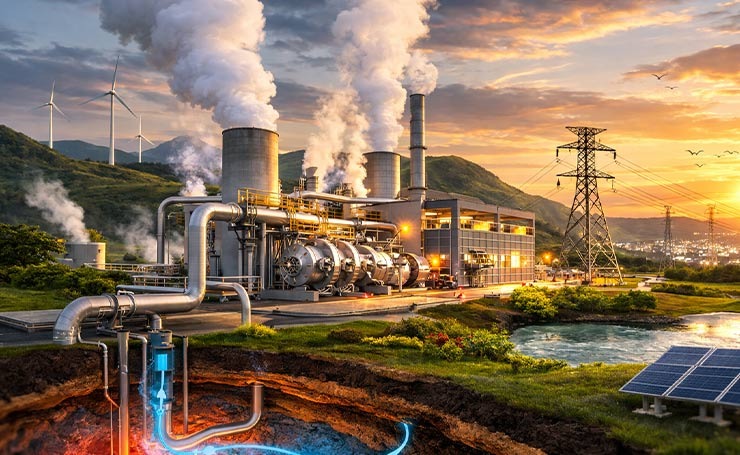
Improvements such as binary cycle plants tap directly into steam from a hydrothermal reservoir, releasing no emissions other than water vapor.
Moreover, the operating costs for geothermal plants have reduced by 50% since the 1980s. In some regions, geothermal electricity will be as cheap as fossil fuels.
Enhanced Geothermal Systems (EGS)
Currently, geothermal plants only work where hot water and steam occur naturally. Only a few regions have that.
However, Enhanced Geothermal Systems are ready to change it. These systems aim to create artificial reservoirs by drilling into hot, dry rock, injecting water deep underground, and fracturing the rock to capture heat. This technology can vastly expand the areas where geothermal energy can be used.
Research, Innovation, and Risk
Governments, research groups, and companies are exploring EGS and other technologies. However, there are concerns about induced seismic activity when creating fractures deep underground. However, the scientists consider the risk lower than that of other activities, such as fracking.
Repurposing Existing Infrastructure
There is also talk about using the old gas and oil wells as geothermal power plants. These wells already reach deep into the Earth and will be easier to convert than drilling new ones.
How Big Geothermal Could Become
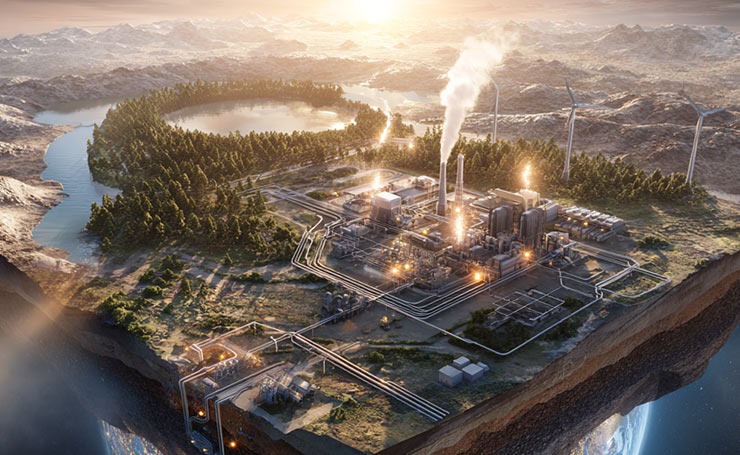
Some analysts believe that despite slow growth, geothermal will become an important part of the renewable energy mix. Moreover, it could supply a significant portion of global power by mid-century, potentially a notable fraction of the world’s electricity demand as part of the clean energy transition.
In a Nutshell
Geothermal power is one of the most sustainable energy sources available today. It harnesses heat from Earth’s core, offers clean electricity and efficient heating, and provides long-term environmental benefits when managed responsibly.
Interested in knowing more about sustainable energy? Visit Green Energy Insights for more guides.
FAQs
How does Geothermal Energy work for Electricity Production?
Geothermal power plants drill wells into underground reservoirs to reach hot water or steam. The steam turns the turbines connected to the generator, thus producing electricity.
Can we use Geothermal Energy for Heating and Cooling our Homes?
Yes, geothermal heat pumps transfer heat between indoor spaces and the ground. They are used for cooling in summer and heating in winter while using significantly less electricity than a traditional HVAC system.
How long does a Geothermal Heating System last in a home?
A residential geothermal heating system lasts around 20 to 25 years, while underground loop systems can last 50 years or more with responsible maintenance.
Is Geothermal a Reliable Source During Extreme Weather or Power Outages?
Yes, geothermal energy does not depend on the weather and provides a steady power supply. However, electricity distribution systems must remain functional for delivery during power outages.
