

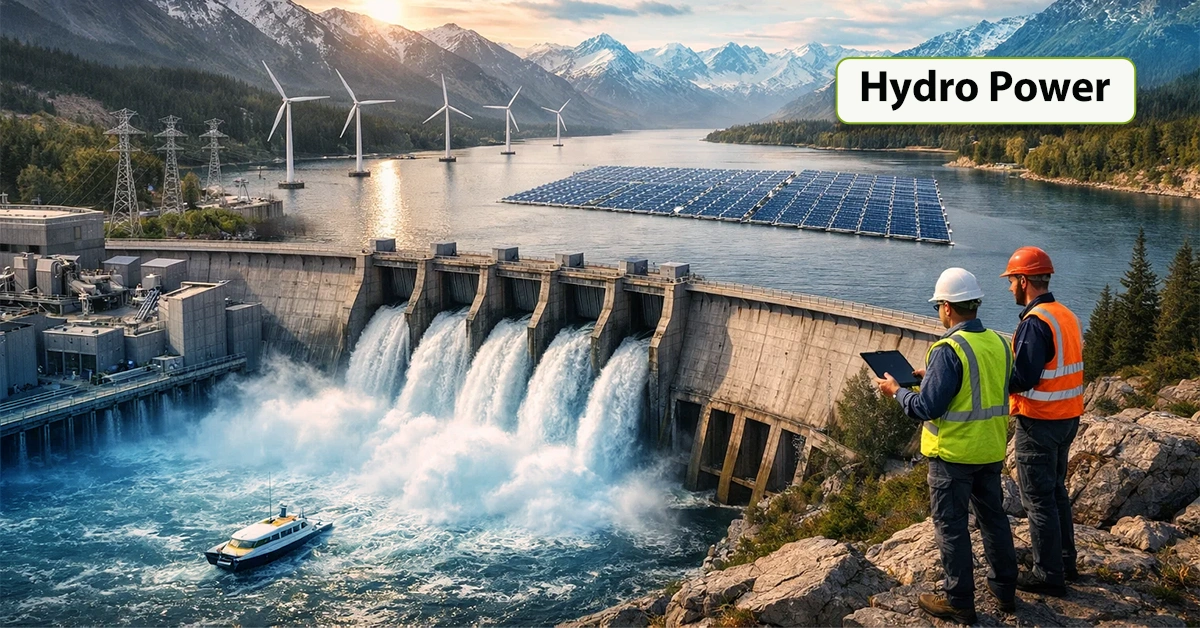
20-Second Summary
By the end of 2025, hydropower will remain the world’s largest renewable energy source, that provides 16% of electrical energy across the globe.
In this comprehensive guide, we will:
- Explore the working of hydropower, along with its various types, and the mechanics of hydroelectric energy.
- Evaluate the advantages of hydropower based on its reliability and carbon emissions.
- The hydropower environmental impact.
- How AI data centre cooling systems are impacting the hydropower reliability in water-stressed regions.
We shall explore the topic to get all the answers around the hydropower energy for the year 2026 and beyond.
What is Hydropower? Understanding the Fundamentals of Hydroelectric Energy
Hydroelectric power uses the kinetic energy and mechanical energy from the flowing water and turns it into electrical power using the turbines. This whole system of hydropower uses the natural force of gravity-driven running water to generate energy. Want to understand hydropower from the ground up? Check our complete beginner’s guide to hydroelectric power.
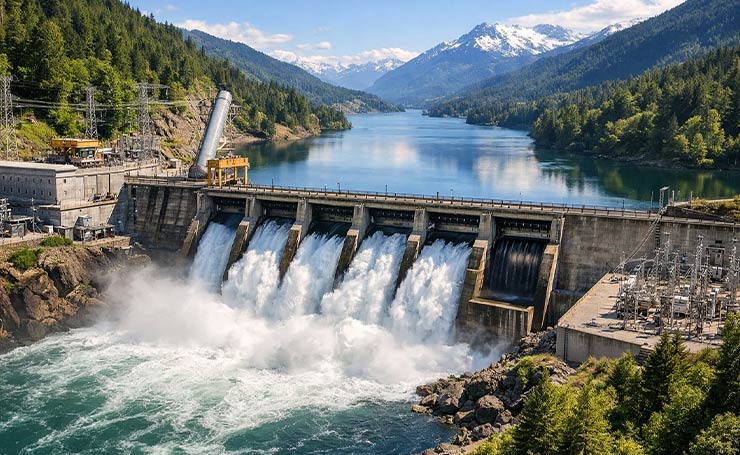
If we have to answer, what is hydroelectric power fundamentally? Then its origin goes back, as it is the oldest energy generation solution, where water wheels used water to power the mills. Today, the hydroelectric power plants have replaced the mechanical work with the use of the spinning shaft that works with the flowing water to run turbines connected to the generator for electricity production.
Hydropower is a renewable energy source, as the water being used to generate the energy is not being depleted, and it keeps flowing to the agricultural systems, municipalities, and ecosystems in this energy generation cycle.
Another fact that makes it a renewable energy source is the consistent precipitation throughout the year that keeps filling our water reservoirs, continuously providing the water for hydropower as a renewable source.
Aside from being a hydropower electricity source, these units also help to control floods, supply water, and provide irrigation support.
Is Hydropower Renewable? The Science Behind Water’s Infinite Cycle
To understand this, first let us understand that renewable energy keeps replenishing itself at equal or exceeding rates of human consumption.
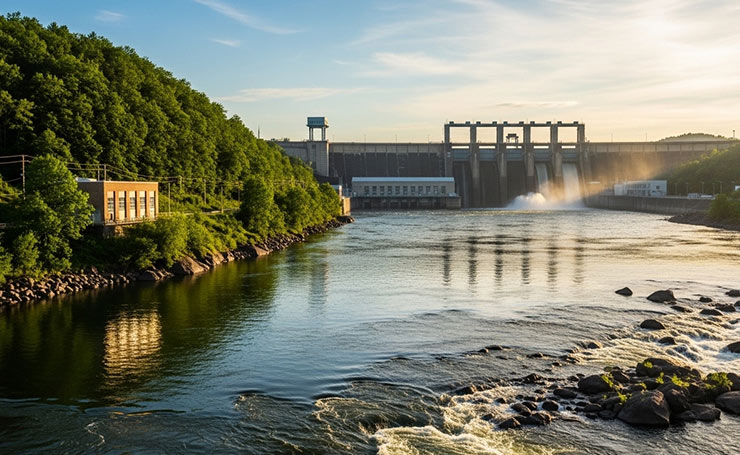
So, is hydropower renewable? Yes, it is because it depends on the solar radiation cycle that helps to evaporate the water, which goes to the environment, forms clouds, and produces precipitation that replenishes the water reservoirs, and this shall stay consistent as long as we have the sun shining in the sky.
Water used for electricity generation in a hydroelectric power plant returns to the environment and keeps coming back in a continuous cycle, which is not the case with fossil fuels.
How Does Hydropower Work? The Step-by-Step Process of Water-to-Electricity Conversion
In order to convert the flowing water into electrical energy, the hydroelectric power generation system has different stages for the conversion process.
- Water is placed at a high elevation where it has the most energy potential. It is then released downwards using a hydroelectric power plant, where the potential energy of water is turned into kinetic energy.
- The water flowing from the elevation goes through a specialized structure called a penstock that maintains the water pressure and moves it forward towards the turbines.
- When the water hits the specially designed curved blades of the turbine with extreme force, they start rotating, reaching 1000+ rotations per minute at times if the system is designed for that.
- These turbine shafts are connected to the generator. The turbine shafts rotate and the magnetsinside the generator start moving around the coils, which produces an electric current using the process called electromagnetic induction.
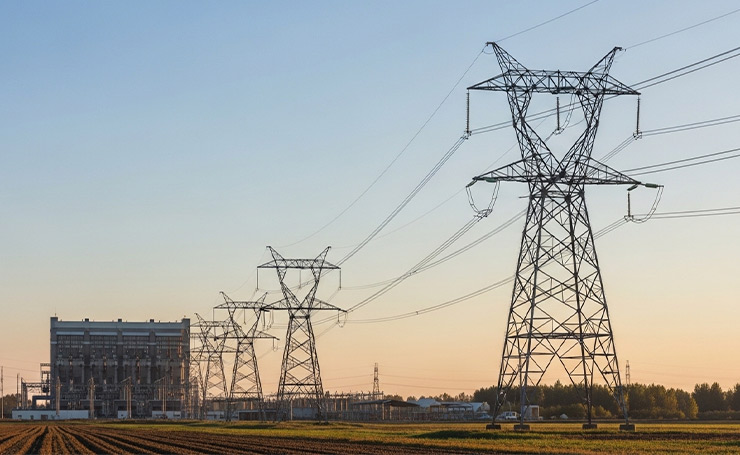
- The electrical energy that is produced is then shifted to transformers and is transmitted to the power stations, which reduce the voltage and distribute it for home and commercial use.
Learn the complete step-by-step mechanics of how water becomes electricity.
Types of Hydropower: Run-of-River, Storage, and Pumped Systems Explained
There are three major types of hydropowerbased on the principle of their water management and energy storage system. Explore a detailed comparison of all three hydropower types, their applications, and when each is best used.
Run-of-River Hydropower: Minimal-Impact Water Generation for Sensitive Ecosystems
Run-of-river hydropower uses the natural flow of water without creating any special reservoirs to create water flow. Discover the full benefits of run-of-river systems and why they’re ideal for environmentally sensitive regions.

A small dam-like facility diverts the water from the river towards the penstock, which then sends it to the turbines that run the generator to create voltage, and the water then goes back to the river immediately.
This is totally different from the hydroelectric dams that use more water to generate high potential of water reservoir from its storage at the elevation point.
Since these run-of-river power systems use natural water flow, they do not flood the large valleys, and alsokeep a steady water flow stream from rivers, indirectly supporting the flood control.
Run-of-river hydropower systems excel in maximum power generation in the following areas:
- Mountainous and hilly regions have steep slopes, creating high hydraulic head, helping turbines to produce maximum energy even at moderate water flow. The examples include: The Himalayas, the Andes, the Alps, and the Rocky Mountains.
- Regions with perennial rivers (rivers that receive good water flow throughout the year). The river systems that are fed by the snowmelts and the glaciers can be really suitable for these structures due to their consistency.
- Regions that receive high rainfall and steady river streams are also good for the run-of-river systems. For example, the Pacific Northwest of North America and Northern Europe.
- Narrow river valleys and gorges are ideal for a run-of-river hydropower system because water flows in fast speed through the tight places in these areas, increasing the speed and generating more power without needing large constructions.
Regions where run-of-river systems are less effective are:
- Flat terrain with low elevation drop limits power generation potential.
- Highly seasonal or drought-prone rivers.
- Rivers with heavy sediment can wear out the turbines and affect their efficiency.
Storage (Reservoir) Hydropower: Traditional Dams and Their Energy Storage Capabilities
The hydroelectric dams are used in the Storage hydropower. These dams create an energy storage system where they hold large volumes of stored water at an elevation point. This water comes from the river valleys and floods upstream areas. Learn how traditional hydroelectric dams work, from engineering to energy management.
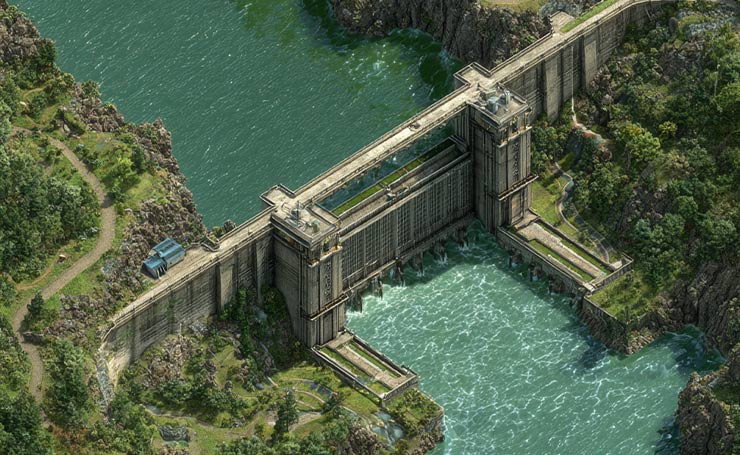
Here is how the Dam-Based Hydropower Process works:
- A dam blocks a river and creates a large reservoir of stored water.
- Water stored at height holds potential energy.
- The higher the water level, the more energy it carries.
- When electricity is needed, gates are opened, and water starts flowing through penstocks.
- Falling water has increased speed and pressure as it moves downward.
- Upon reaching the turbines, this fast-moving water spins the turbine blades.
- The turbine turns a connected generator.
- The generator converts motion into electricity.
- Transformers raise voltage so electricity can travel long distances.
- Operators control water flow to match electricity demand.
- Stored water acts like a natural battery for on-demand power.
These hydroelectric power plants hold the capacity to meet the electricity demand within minutes.
These dam systems also provide flood control by retaining the flooding water and provide water to meet the agricultural and municipal needs.
But as much as there are upsides, there are some downsides to this system as well, including:
- Large reservoirs flood valleys.
- They can disrupt fish migration.
- They can change the downstream water flow patterns and temperatures.
Although these have an environmental impact, new technologies are integrating the following technologies to mitigate these impacts:
- Integrating fish passages.
- Habitat restoration programs
- And temperature management with selective water releases.
Pumped Storage Hydropower: The Advanced Battery Solution for Grid Stability
There are two water reservoirs attached to a pumped-storage hydroelectricity system. Both of these are at different elevations, with one at a higher and the other at a lower elevation.
When the energy demand is low, excess electrical power from the grid is used to pump the water back to the high elevation reservoir and store it there so it can be released when there is increased energy demand.
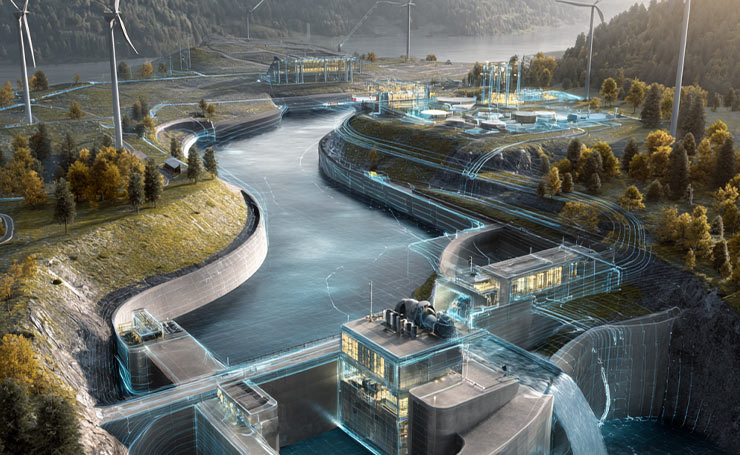
This whole mechanism involves using the reversible turbines and generators that not only generate electricity, but also pump the water back to the higher reservoir.
This pumped storage hydropower provides the energy storage capacity essential for grids with high renewable energy penetration. This means that having a hybrid system with these pumped storage hydropower works great, as the renewable energy source fields can help to pump the water to a higher elevation, and then when the weather is not great, and windpower or solar power cannot perform efficiently, this system can then generate electricity.
- Pumped hydro power units are a great attraction because they can store huge amounts of energy that exceed the storage capacity of even the largest lithium batteries, and are very inexpensive.
- The storage system has a round-trip efficiency of 70 to 80 per cent, which means that upon using the 100 units of electricity to pump water back to a high elevation, you will get back 70-85% of the units back again, which is a great efficiency.
- Grids are choosing to switch to more renewable sources like solar and wind power, which need storage capacity to meet the energy demand when renewable sources cannot provide full capacity, which can be mitigated by a pumped hydropower plant.
Explore how pumped storage works as an advanced battery solution for modern renewable energy grids.
Advantages of Hydropower: Why It Powers the Energy Transition
Hydropower is playing a great role in renewable energy production globally based on its technological and environmental advantages. See a comprehensive breakdown of all hydropower advantages with data-backed comparisons.
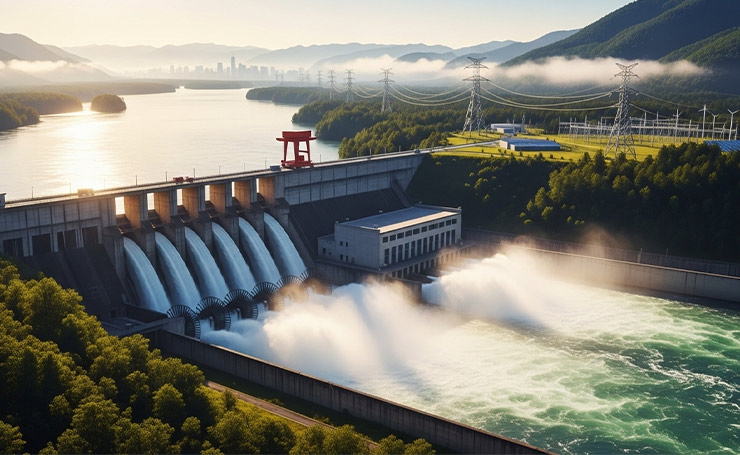
- Hydropower delivers an efficient environmental performance by producing zero emissions, which leads to not using any fossil fuels or non-renewable resources, resulting in greenhouse gas emissions.
- A single hydropower plant can prevent fifty gigatons of CO2 emissions when we compare it to fossil fuels.
- Hydropower can keep producing energy without the limitations of weather and time, as time limits solar capacity, and weather can limit wind power capacity.
- Even though the initial building cost of a hydropower system is huge, it is slowly paid back in its 50 to hundred years of electricity production with little maintenance requirements due to the huge amount of electricity it produces.
- Since they do not need battery storage and can hold a huge amount of water in reservoirs to produce energy, their storage capacity is long-term and does not expire.
- Hydroelectric plants can respond to peak electricity demand within minutes by releasing stored water, unlike fossil fuel plants that require hours to ramp up.
When it comes to scaling the energy capacity, cost-effectiveness, and long-term storage capacity, no other renewable energy resource can match the capability of hydropower.
Disadvantages of Hydropower: Honest Assessment of Environmental and Technical Challenges
Every technology has some downsides, other than the advantages, that we need to consider.
- The hydropower environmental impact on aquatic ecosystems is the first concern of this industry. Hydroelectric dams can block fish migration, preventing them from swimming upstream. Understand the full environmental impact of hydropower and the modern mitigation strategies being deployed. This is being mitigated by companies by integrating fish ladders and elevator systems to help fish pass the dam.
- The installation of hydropower dams can lead to deforestation, forcing communities to leave their habitat.
- Hydroelectric dams can also change natural water flow patterns in rivers downstream, disrupting the ecosystem.
- When dams are made, they can block sediment, which can cause a lack of nutrients in the Downstream soil, causing the river deltas to erode with time.
- In tropical regions, decomposing organic material in reservoirs can produce methane, a powerful greenhouse gas. However, methane emissions are still significantly lower than greenhouse gas emissions from fossil fuels.
- They are also not supported at a large scale in flat regions, as they require specific elevation differences.
- The timelines for developing these projects and their upfront costs can also be considered a factor as a limitation, as it takes 5 to 15 years to plan, get permits, and then start construction, considering environmental implications too.
But despite these, it is not adverse as most of these challenges can be eliminated with proper planning and actions.
Hydropower vs Fossil Fuels: Comprehensive Comparative Analysis
The comparison of hydropower vs fossil fuels explains why renewable energy sources like hydropower are necessary for climate change mitigation. See the complete analysis comparing hydropower to fossil fuels across emissions, cost, reliability, and environmental health.
Below is a comparison table showing how hydropower is better.
| Aspect | Hydropower | Fossil Fuels |
| Operational Emissions | Produces zero operational emissions; water flowing through turbines generates no CO2, methane, or particulate matter | Releases stored carbon; coal, oil, and natural gas combustion emit billions of tons of CO2 annually |
| Climate Impact | Over a 50-year lifespan, avoids gigatons of greenhouse gas emissions | Contributes significantly to climate change through continuous greenhouse gas emissions |
| Cost | High upfront capital investment but minimal operational costs; lifecycle costs over 50–100 years are generally lower | Continuous fuel purchases required; costs fluctuate with commodity prices; higher lifecycle costs |
| Reliability & Energy Security | Relies on renewable precipitation; energy is locally available and free; less vulnerable to supply disruptions | Dependent on continuous fuel supply; vulnerable to price spikes and supply disruptions |
| Environmental Health | Produces no air pollution; the mining impact is typically manageable | Produces air pollution, causing respiratory disease and premature death; mining devastates landscapes |
| Long-term Sustainability | Renewable and sustainable over decades | Non-renewable; finite resources with long-term environmental consequences |
Hydropower vs Solar Energy and Hydropower vs Wind Power: Understanding Complementary Strengths
When talking about renewable energy sources, solar energy and wind energy also come into consideration as they are other major sources of renewable energy supply. Explore how hydropower compares to solar and wind, and how they work together in modern energy grids.
Let us have a brief look at how they compare with hydropower energy.
| Aspect | Hydropower | Solar Energy | Wind Power |
| Optimal Regions | Rivers and reservoirs; topography-dependent | Sun-rich deserts and tropics; high isolation | Offshore, high plains, windy areas; wind-rich zones |
| Deployment Speed | Slower; capital-intensive | Rapid rooftop, land, or floating deployment; modular | Moderate speed; medium-scale deployment |
| Capacity & Reliability | High capacity factor; dispatchable power | 25%+ in ideal conditions; intermittent generation | Variable output; intermittent power |
| Energy Storage | Natural reservoir storage; hydraulic storage | Requires batteries; chemical energy storage | Requires grid support; grid balancing |
| Role in Hybrid Systems | Backbone: reliable power and storage; system stabilizer. | Expands capacity quickly; capacity booster | Supplements power in windy regions; supplementary generation |
| Best Use Case | Regions needing baseload and storage; long-term reliability | Arid, sunny regions; rapid deployment | Coastal or plains regions; wind resource utilization. |
If you ask, Is hydropower the best renewable energy? Then, based on their comparison, we can tell you that it is a great source of energy when we need reliable and continuous electric energy with inexpensive energy storage capacity, but solar and wind energy both are also good options for a quick energy supply.
But overall, based on geographical areas, the regions that can support dams should definitely benefit more from hydroenergy systems, but having solar and wind energy as hybrid options can make the energy supply more efficient, as compared to the use of fossil fuels.
Emerging Challenge: Hydropower Reliability in an Era of Water Stress and Competing Demands
The reliability of hydropower is increasingly challenged by competing water demands and changing precipitation patterns.
AI, Agriculture, and Industrial Demand as Competing Forces
Hydropower depends on abundant, consistent water flow through rivers and reservoirs. Multiple sources across the world are putting mounting pressure on the water supply.
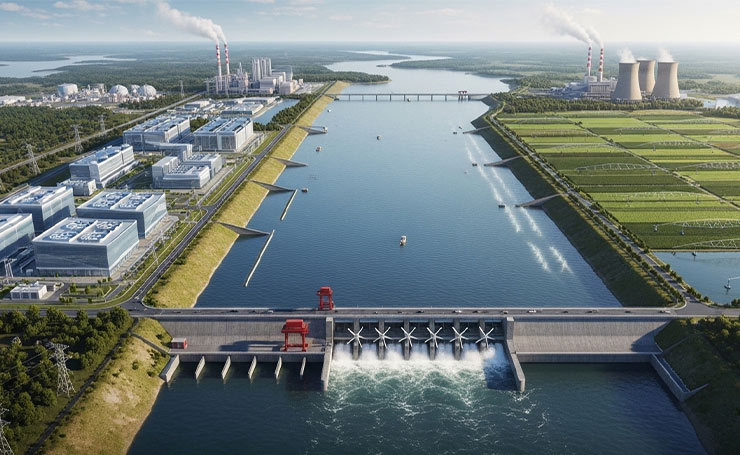
- Agricultural irrigation consumes approximately 70% of freshwater in many regions.
- Industrial cooling for fossil fuel plants and nuclear reactors demands enormous quantities.
- Municipal water systems serve growing urban populations.
- A new competitor and challenger is the AI data centres and artificial intelligence infrastructure. Modern AI systems demand huge quantities of water for cooling. Major AI companies are constructing massive data centers requiring millions of gallons daily for thermal management. Entire regions could soon face water allocation conflicts between hydropower electricity generation and AI cooling water demands.
- In severely water-stressed regions, hydropower now experiences significant month-to-month and year-to-year variability. A hydroelectric power plant cannot produce electricity when the reservoir runs dry, regardless of turbine capacity or generator efficiency.
Mitigation Strategies: Adapting Hydropower for Water-Stressed Futures
In order to mitigate these issues, there are several key considerations that need to be addressed practically.
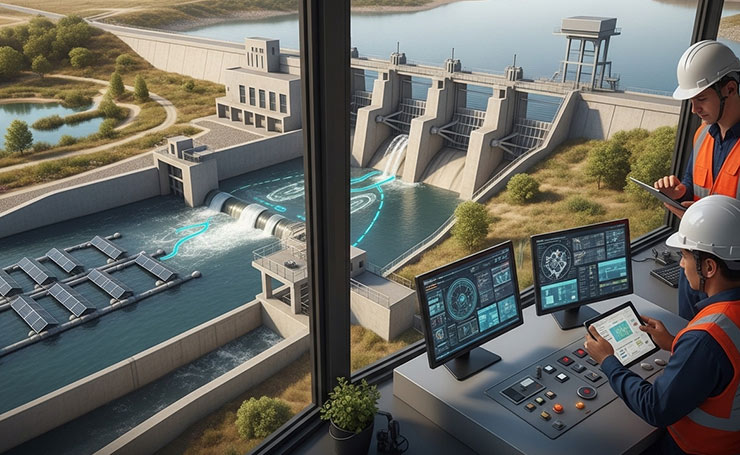
- Pumped storage hydropower using renewable electricity from solar and wind energy for pumping water uphill to can enable water storage for later use.
- Farmers can reduce competition with hydropower by using irrigation methods that require less water:
- Minimize waste and evaporation by using drip irrigation to directly water tha plants’ roots.
- Use micro sprinkler systems that use low pressure and controlled spraying to reduce runoff.
- Precision irrigation relies on sensors and data to apply only the amount of water crops actually need.
- Irrigating during cooler hours lowers evaporation.
- Switch to drought-resistant or low-water crops to further reduce overall water demand.
- Industries can lower water demand by using air cooling or recovering waste heat instead of water cooling.
- AI and data centres can move to regions with abundant water or use cooling systems that need less water.
Basically, water management for hydropower reliability should be considered as a shared resource for which every sector should strategize to minimize the use and make the renewable resource last longer.
Hydropower Technology and Future Innovations: The Path to 2026 and Beyond
Despite challenges, Future of Hydropower 2026 is going to be radical for the generation of power, and many technological developments are emerging to enhance the performance of Hydropower in the upcoming years.
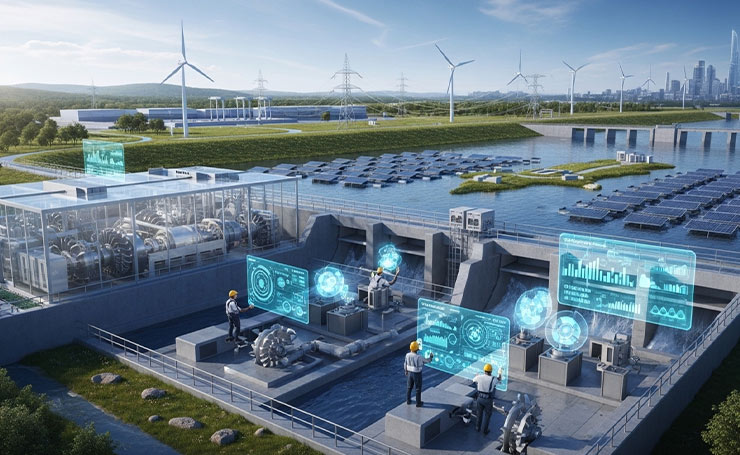
- AI-driven systems will analyze the weather forecasts and help to adjust the operations of the hydropower plants based on water conditions and energy demand.
- Machine learning will also be able to detect any issues in the turbine system to address them and prevent any machinery failures.
- New pumped storage hydropower technology using the closed-loop system can use the same water again and again without relying on using fresh water from rivers, minimizing the use and waste of fresh water.
- The new small and modular turbines are making it possible to install pumped storage systems in small rivers, making the hydropower available without having to install dams and preventing the extra costs.
- Environmental technology advances are also being made, which include:
- Advanced fish passages.
- Selective withdrawal systems to manage water temperature.
- AI monitoring of ecosystem indicators enables rapid response to environmental concerns.
Final Remarks: Understanding Hydropower’s Continued Relevance
Hydropower is still the key player in providing the renewable energy for electricity generation worldwidebeing 16% of the electricity generation source in various countries, including Norway (95%), Iceland (73%), New Zealand (70%), Brazil (65%).
Hydroelectric energy dominates other renewable energy sources because it offers unique advantages, including efficient energy storage and grid stability.
A balanced strategy of expanding the hydropower energy projects in water-abundant areas, along with the implementation of technologies that focus on the reduction of freshwater demands in other competitive sectors like agriculture, AI, and Industrial sectors, will enhance the efficiency and sustainability of Hydroelectric power plants.
Hydropower will remain central to renewable energy transitions, but as one component of diversified systems rather than the complete solution.
Keep visiting Green Energy Insights for regular updates on Hydropower and its role in renewable energy generation and environmental stability.
Frequently Asked Questions
1. What is the impact of Hydroelectric Dams on our environment?
Hydroelectric dams used in hydropower plants can be a barrier to fish migration, change the water flow, trap sediment, and release methane in some regions. These impacts can be mitigated by using the modern hydroelectric plants and technology. Over their full life cycle, hydro power generates renewable electricity with far lower climate change damage than fossil fuels.
2. How Does Hydropower Compare to Solar/Wind in Reliability?
Hydropower plants offer reliable renewable electricity with high capacity factors and built-in energy storage. Stored water allows hydroelectric power plants to quickly adjust electricity generation to meet demand, though water shortages can limit reliability in some regions.
3. Is Hydropower Really Renewable? Won’t We Run Out of Water?
Hydropower is renewable because it relies on the natural water cycle. Water used to generate electricity is not consumed and continues flowing back into rivers and oceans. However, water shortages in some regions can reduce its reliability.
4. What’s the Difference Between Run-of-River and Pumped Storage?
Run-of-river hydropower uses river water to make electricity with little environmental impact, but it depends on river flow. Pumped storage hydropower uses two sources at lower and upper elevations, and stores water to produce electricity when needed, helping the grid.
5. What’s Happening to Hydropower Reliability with Water Scarcity & AI?
Hydropower is becoming less reliable because agriculture, industry, and AI data centres are competing for water. A reduction in water levels in reservoirs can reduce electricity generation and be a threat to baseload power. This can be solved by using the pumped storage, different irrigation techniques, and smart water management practices.
