

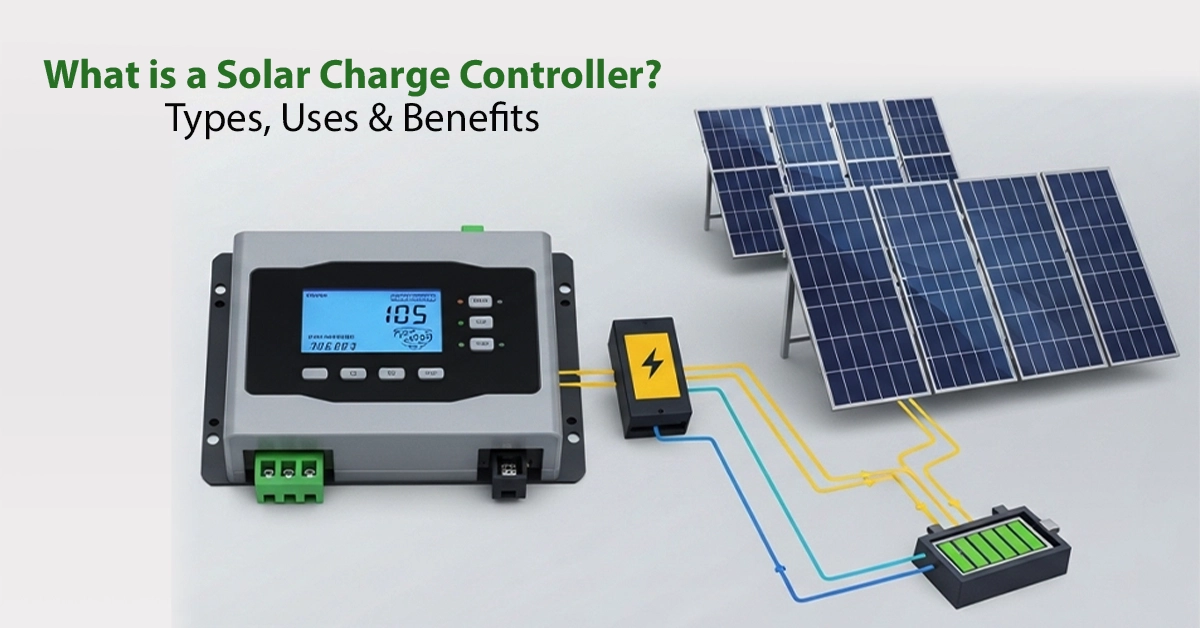
A solar power system needs more than one solar panel to work properly and safely. However, many people tend to overlook an extremely critical component: the solar charge controller.
Whether you have a home solar system or an off-grid solar system, this device plays an important role in protecting your batteries and ensuring reliable power generation.
In this guide, let’s discover what a solar charge controller is, how it functions, its different types, and how to choose the right one for your solar system.
Key Takeaways
- A solar charge controller is essential for an off-grid or battery-tied system because it keeps batteries from overheating and malfunctioning.
- MPPT solar charge regulators are more efficient than PWM controllers despite a higher upfront cost.
- Proper charge controller sizing depends on system voltage and complete panel wattage.
- Most battery-based solar systems need both a charger and an inverter, as they have different yet equally important roles.
What is a Solar Charge Controller?
A solar charge controller or voltage regulator manages current and voltage to prevent batteries from overcharging. Without it, batteries can be damaged by incoming power and even send the power back to the solar panels in the absence of sunlight.
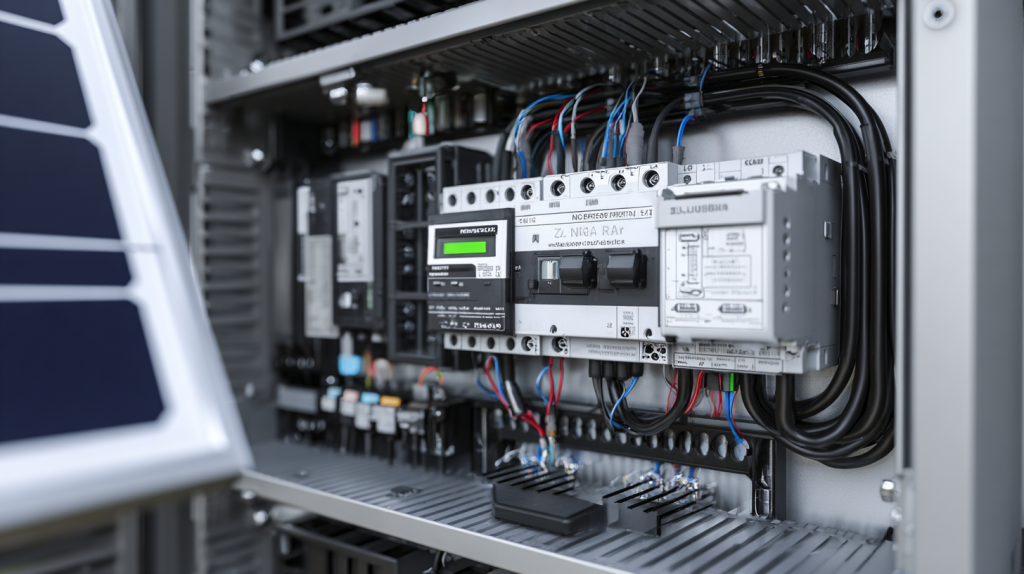
In short, this controller ensures that the batteries are charged at the optimal level. For instance, Most 12-volt solar panels generate around 16 to 20 volts. The batteries need around 14 to 14.5 volts to charge safely. Without regulation, this voltage mismatch can lead to battery overcharging and damage.
Why Is a Solar Charge Controller Essential?
Batteries are one of the most expensive components of a solar system. A solar charge controller is important for protecting them, extending their lifespan, and improving overall system efficiency.
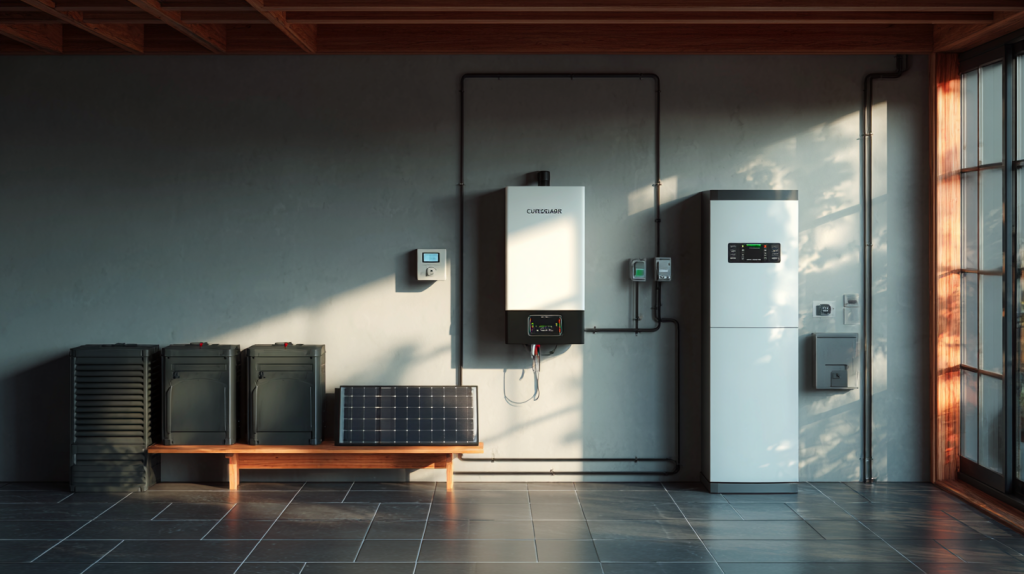
Some important benefits are as follows.
- Battery Protection: This controller prevents overcharging, voltage spikes, and deep discharging.
- Improved Efficiency: It optimizes the charging process.
- System Safety: It reduces the risk of overheating and electrical issues.
- Consistent Power Output: It ensures stable energy storage for later use.
Batteries can degrade faster without a charge controller, leading to higher maintenance and replacement costs.
How a Solar Charge Controller Works
The solar charge controller’s working principle is based on regulating electrical energy flow from the PV panels to the battery bank.
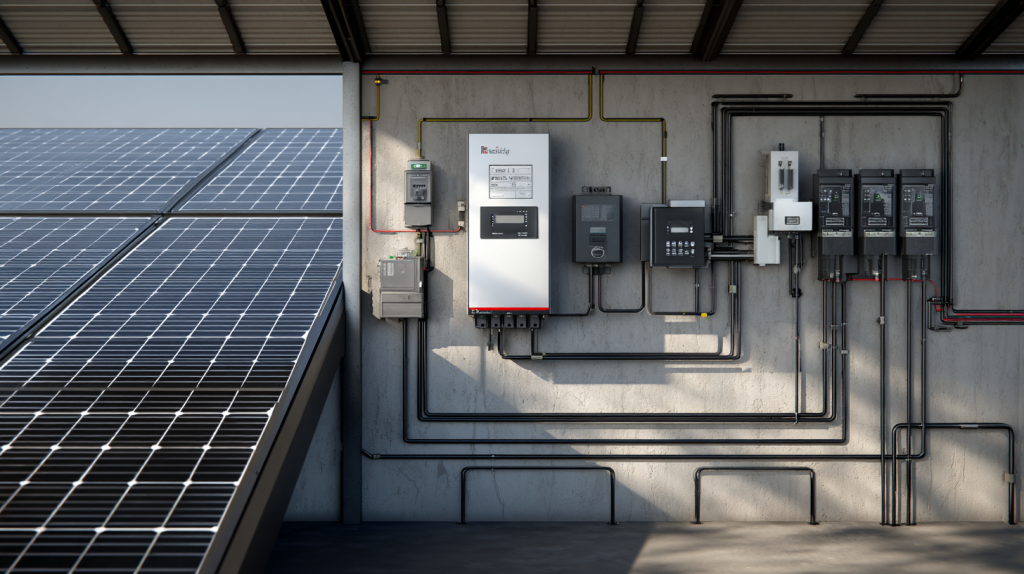
The controller basically sits between your panels and your batteries. Oftentimes, solar panels create more energy than the batteries can handle. If this voltage goes straight to the batteries, it can cause extreme damage, overheating, and even shorten battery life. The charge controller prevents this by managing the amount of power the battery receives.
When sunlight hits the panels, electricity is generated and sent to the controller. The controller monitors battery voltage and charge level. It then adjusts the charging current based on battery needs. Once the battery is charged completely, the controller reduces or stops charging.
The stored power is sent to the inverter, which converts the electricity into a form that your home appliances use.
Solar Charge Controller Types
The two main types of solar charge regulators are MPPT and PWM. Both of them have their advantages based on array size, system components, and climate.
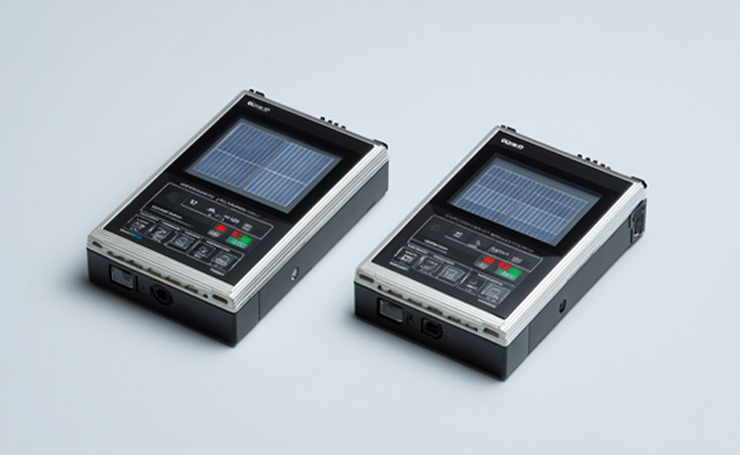
MPPT Solar Charge Controller
MPPT controllers (Maximum Power Point Tracking) are more expensive than PWM and are more efficient in many circumstances.
An MPPT charge controller allows solar panels to operate at their efficient voltage and converts excess voltage into usable power. It makes it possible to use higher-voltage panels while charging lower-voltage batteries efficiently.
For most modern and off-grid setups, MPPT is considered the best solar charge controller option despite its high cost.
PWM Solar Charge Controller
PWM controllers (Pulse Width Modulation) are smaller and less expensive than MPPT controllers. It is commonly used in small solar systems, like RV and small cabin setups.
This controller works by directly matching the solar panel voltage with the battery’s voltage, meaning both panel and battery operate at similar voltages. Because of this limitation, PWM controllers need specific low-voltage solar panels.
This controller works best in warm and sunny weather. Moreover, it turns charging on and off to control battery charging rather than adjusting voltage smoothly, which leads to the loss of some usable solar power.
| Feature | MPPT Solar Charge Controller | PWM Solar Charge Controller |
| Full Form | Maximum Power Point Tracking | Pulse Width Modulation |
| Efficiency | High (typically 95–98%) | Lower (voltage is matched to battery) |
| Power Harvest | Extracts maximum available power from panels | Uses panel voltage close to battery voltage |
| Best For | Medium to large systems, off-grid setups | Small, simple solar systems |
| Panel Voltage Flexibility | Supports higher panel voltages | Panel voltage must closely match battery voltage |
| Performance in Low Light | Performs better in cold or low-light conditions | Performance drops noticeably |
| System Cost | Higher upfront cost | More affordable |
| System Expansion | Better for future system upgrades | Limited scalability |
| Typical Use Case | Home solar systems, off-grid installations | RVs, small cabins, basic setups |
Who Needs a Solar Battery Charge Controller
All off-grid solar systems need a charge controller that can regulate the flow of electricity moving to and from the batteries.

People with grid-connected solar panels usually do not need it because the utility company gathers the excess energy produced and utilizes the electricity.
Common Features of a Solar Battery Controller
The common features of the simplest PWM controller include setting the type of battery and battery bank voltage, and lights showing the phases of charging.
The more advanced PWM and MPPT controllers have
- A small LCD display to show data and programming
- A communications port to connect the controller to an external display or a computer
- A heat sensor port to track battery temperature
The most advanced models come with Bluetooth connectivity and an app for customizing settings.
Solar Charge Controller Sizing Guide
Solar charge controllers come in many sizes that suit different systems with varying voltages and currents. You can face power loss or inefficiency if you choose the wrong one.
To find the right size, start by checking the voltage rating on the charge controller. Many PWM controllers are rated for around 12 or 24V, whereas MPPT ones can handle 12, 24, 36, and 48V.
Moreover, most charge controllers have an amp rating. Small PWMs are rated at 10, 20, or 30 amps, while MPPT controllers are around 80 to 100 amps to support larger solar systems.
To see the potential amps that a solar system can output, you need to use the following formula.
Solar Charge Controller Amps Calculation
Amps = Watts/ Volts
Let’s say we have a 480-watt system running at 24 volts. Put these numbers into the above equation.
Amps = 480 watts/ 24 volts = 20A
This calculation shows that the system can produce upto 20 amps. A controller rated below this number can overload and malfunction. So, a 30-amp controller will be a suitable choice for this system.
Solar Charge Controller vs Inverter
A common misconception is that many confuse a solar charge controller with an inverter. The truth is that both devices perform different functions.
| Feature | Solar Charge Controller | Inverter |
| Primary Function | Regulates power from solar panels to batteries | Converts DC power into AC power |
| Main Purpose | Protects and safely charges batteries | Powers household appliances |
| Power Conversion | DC to DC (regulates voltage/current) | DC to AC |
| Connected To | Solar panels and battery bank | Battery bank or solar system output |
| Required for Batteries | Yes, essential | No, but commonly used |
| Role in System | Prevents overcharging and battery damage | Makes solar power usable in homes |
| Works Without Batteries | No (in most systems) | Yes (in grid-tied systems) |
| Used In | Off-grid and battery-based solar systems | Grid-tied, hybrid, and off-grid systems |
Common Solar Charge Controller Problems and Troubleshooting
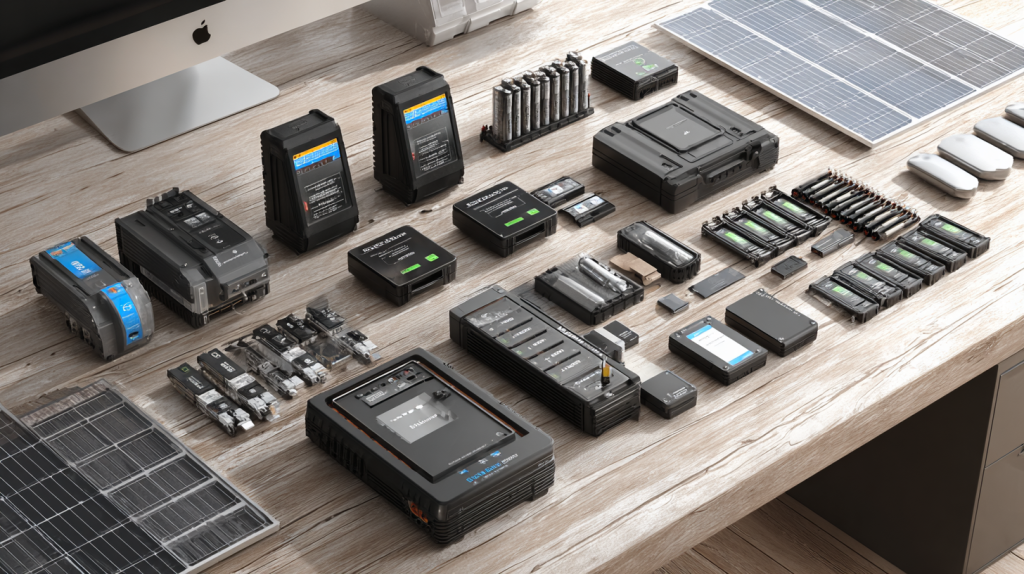
Some common issues include
- Incorrect voltage reading
- Controller not charging batteries
- Overheating or error codes
Take the following controller troubleshooting steps.
- Check wiring and connections.
- Verify voltage and current ratings.
- Ensure controller settings match the battery type.
How to Choose the Right Solar Voltage Controller
Consider the following aspects if you want to choose the best charge controller.
- System size and panel voltage
- Battery type (lead-acid or lithium-ion)
- Budget and efficiency needs
- Indoor and outdoor installation requirements
Generally, MPPTs are most recommended for home and off-grid systems due to better performance.
In a Nutshell
A solar charge controller is a necessary component of a battery-based solar panel system. It protects batteries from overheating and damage, and enhances overall system efficiency. It is important to understand the difference between PWM and MPPT, along with proper sizing and installation, to build a reliable solar power system.
Feel free to visit Green Energy Insights to learn more about renewable energy.
FAQs
Do I need a Solar Charge Controller if I have an Inverter?
Yes, an inverter does not regulate battery charging. A solar charge controller is required to protect batteries from overcharging and voltage fluctuations.
Can I use one Solar Charge Controller for Multiple Battery Banks?
Most standard controllers manage a single battery bank. For multiple battery banks, you usually need separate controllers or specialized equipment.
Is the MPPT Solar Charge Controller suitable for Small Solar Systems?
A PWM charge controller is generally suitable for very small solar systems. However, MPPT is still suitable if the panel voltage is far higher than the battery voltage.
Can a Solar Charge Controller Work without Batteries?
Most charge controllers are designed to handle solar systems with batteries. Battery-less systems typically use grid-tied inverters.
What happens if the Solar Charge Controller is undersized?
An undersized controller can overheat, limit power output, or even fail prematurely, reducing system efficiency.
