

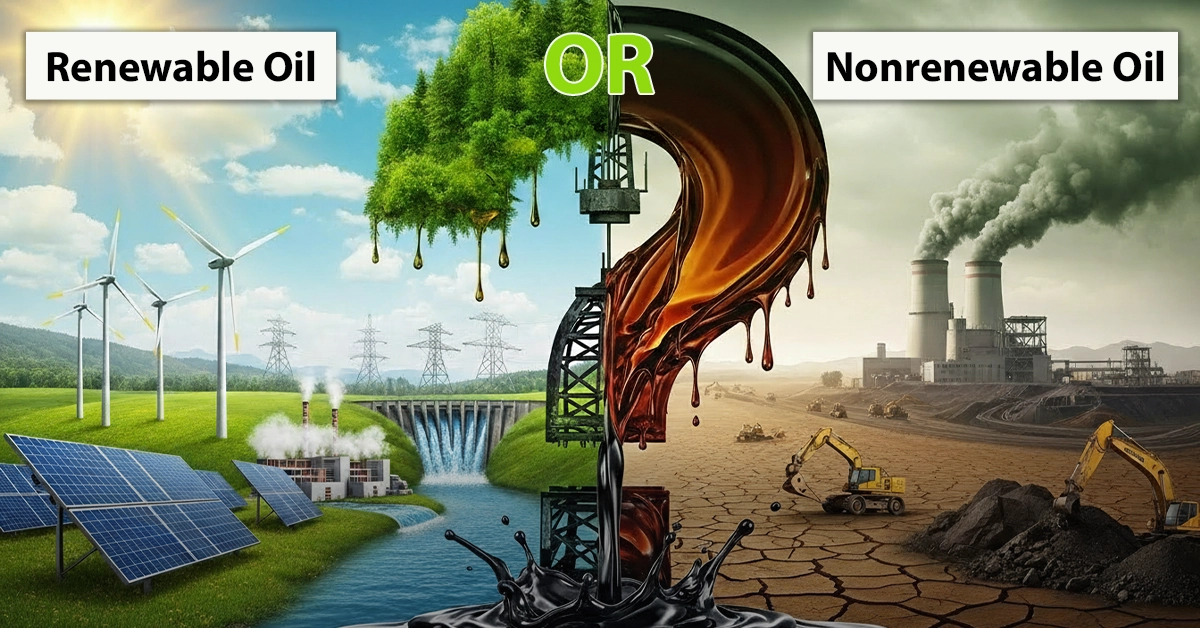
20-Second Summary
We are answering “Is oil renewable?” in this blog, to let you all understand why oil is a non-renewable resource as a fossil fuel that has been formed over a geological timescale.
In this blog, you will understand the following:
- Oil consumption rate
- Resource depletion
- Peak oil
- Finite oil reserves
- Environmental impact of oil
- Greenhouse gas emissions and oil
- Nature of carbon‑based fuel
We will also discuss the future solutions with renewable oil, bio‑oil, synthetic crude oil, algae‑based biofuel, hydrothermal liquefaction, and renewable energy alternatives like solar energy, wind energy, biomass, and drop‑in fuels to support the broader energy transition.
Nonrenewable resource: Why Oil Is Classified as Nonrenewable

Oil is known as a non-renewable resource because it has been formed as a result of the decomposition of the organic matter or the remains of the ancient marine organisms like algae and plankton that were buried underground, and due to the intense heat and pressure over millions of years, these were converted into oil.
No dinosaurs were involved in the formation of the oil as fossil fuels.
Since oil has been formed as a liquid fossil fuel, and the formation takes up millions of years, it is a resource for energy that will not replenish itself easily like solar or wind energy, and will be depleted with continuous use; it is classified as a non-renewable resource.
While fossil fuels like oil provide a high-output energy source, they come with high environmental costs, which makes it necessary to look for and shift to renewable energy sources for environmental stability.
Fossil Fuel: What Oil Is and How It Compares to Other Fossil Fuels
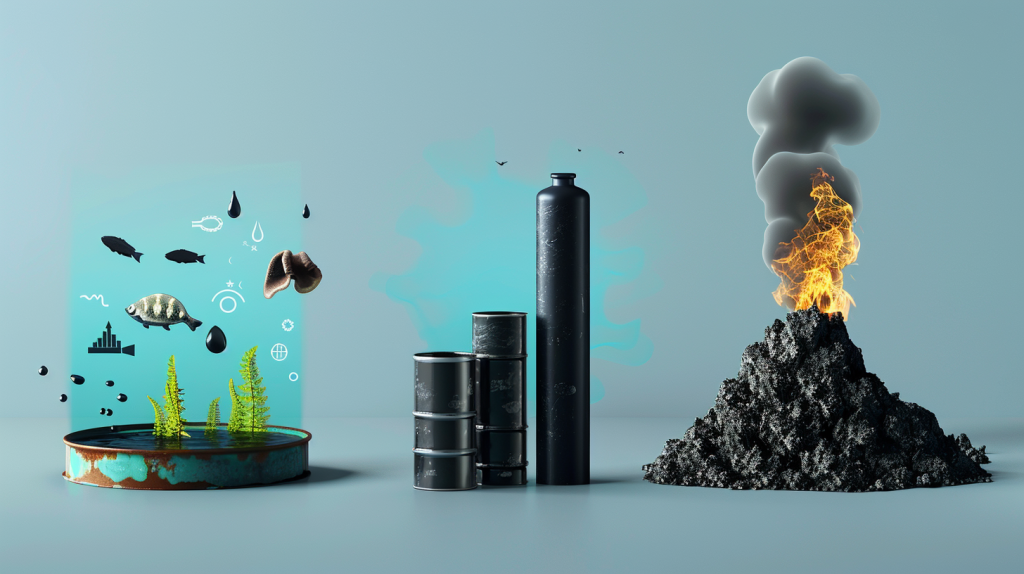
When it comes to all the non-renewable energy sources, known as the fossil fuels, we usually have three types of fossil fuels, including oil, natural gas, and coal. Let us see how oil differs from other fossil fuels based on some important factors.
| Aspect | Oil (Crude Oil / Petroleum) | Natural Gas | Coal |
| Physical form | Liquid fossil oil is found in oil deposits | Gaseous fuel | Solid fuel |
| Main origin material | Organic material from plants and animals | Organic matter from plants and animals | Dead plants |
| Typical use | Fuel such as jet fuel and other fuels | Produce electricity and heat | Generate electricity |
| Carbon impact | High greenhouse gas emissions | Lower carbon dioxide emissions than other fossil fuels | The highest greenhouse gas emissions |
| Energy efficiency | High energy density | Cleaner-burning fuel | Lower efficiency |
Formation of Oil: From Ancient Organic Matter to Hydrocarbons

The marine organisms, like algae and plankton, die and their bodies sink to bottom of the ocean and get mixed with the mud, silt, and sand, forming organic-rich layers.
With time, the thick layers of sediment start accumulating over them, burying them deep inside the surface of the earth
Since the condition underneath all the layers has a low-oxygen condition, the organic matter stays preserved and does not break down.
Continued burial presses the sediments together, turning them into fine-grained rock that contains large amounts of organic material, known as source rock.
With the continuing increase in depth, high pressure, and rising temperatures, the crust of the Earth.
This pressure converts the buried organic matter into a solid, waxy substance, which is known as the kerogen.
Kerogen breaks down into liquid hydrocarbons, forming crude oil and some natural gas, at temperatures between 60°C and 120°C.
Being lighter than the water, the oil and gas formed as a result of the whole process move out of the dense source rock.
These become migrating hydrocarbons that get collected in porous and permeable rocks known as reservoir rocks.
Layers of rock, such as shale or salt, block oil and gas from moving upward, and keep them underground.
Over millions of years, the trapped oil and gas collect in one place, forming reservoirs that can later be used to produce energy.
Oil Consumption Rate: How Fast We Use Oil Today

Global proven oil reserves of 1.77 trillion barrels (Source: OPEC, 2024), at current consumption of 103.75 million barrels per day, could last approximately 47 years if we keep using it at the same pace.
This should not be taken as a confirmed resource, as there are still many oil sources that have not been discovered yet, and humankind is now also working on creating alternatives to oil.
Resource Depletion: The Reality of Dwindling Oil Reserves
Since oil is a non-renewable resource that forms naturally as a fossil fuel, it is a resource that is getting depleted as with continuous use, the available resources of oil are reducing gradually.
Depletion rate might seem slow, but this comes with long-term energy security risks and economic instability for regions that highly depend on oil as an energy resource.
Below is the table that shows which sectors are using the oil resources and what role they are playing in its depletion.
| Sector | Approx. Share of Oil Consumption | Role in Depletion |
| Transportation (road, aviation, marine) | ~60-68 % of total oil use | The largest contributor to oil depletion is due to fuel demand for vehicles and jets |
| Industrial & Petrochemicals | ~25-30 % of oil use | High use for manufacturing plastics, chemicals, machinery, and heating increases long-term drawdown |
| Residential & Commercial | ~5-7 % of oil use | Smaller share, mainly heating and energy for buildings |
| Electricity Generation | <5 % of oil consumption | Limited role globally, but still contributes in some regions |
Peak Oil: What It Means and Its Implications for Future Supply
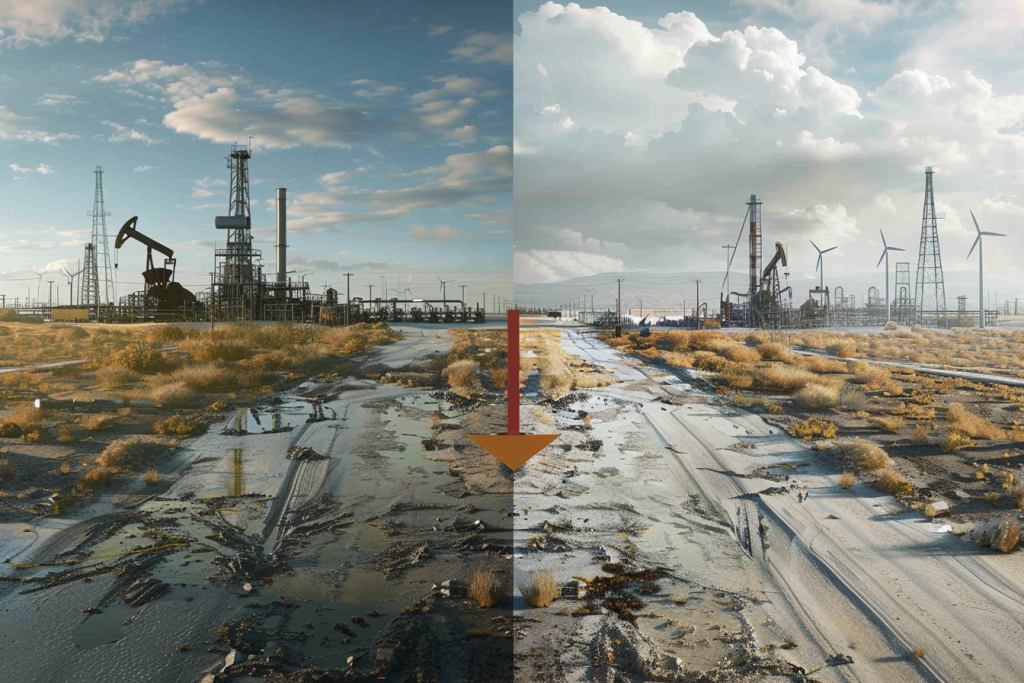
Peak oil is basically a concept, and a point where the oil production will reach its maximum level, with the supply stopping to grow. This will be a phase in which the oil will not completely run out, but the production rate will slow, and extracting new resources will become more difficult.
- So many fields in the world are already reaching the peak oil stage, and this will affect fuel prices, energy security, and supply stability.
- After reaching the peak oil point, we will have a post-peak declining stage where less oil will be available each year, reaching the advanced depletion stage where the leftover oil will be hard and costly to extract, decreasing the supply and increasing prices.
Peak oil is the major reason for transitioning to renewable energy alternatives.
Environmental Impact of Oil: The Consequences of Extraction and Use
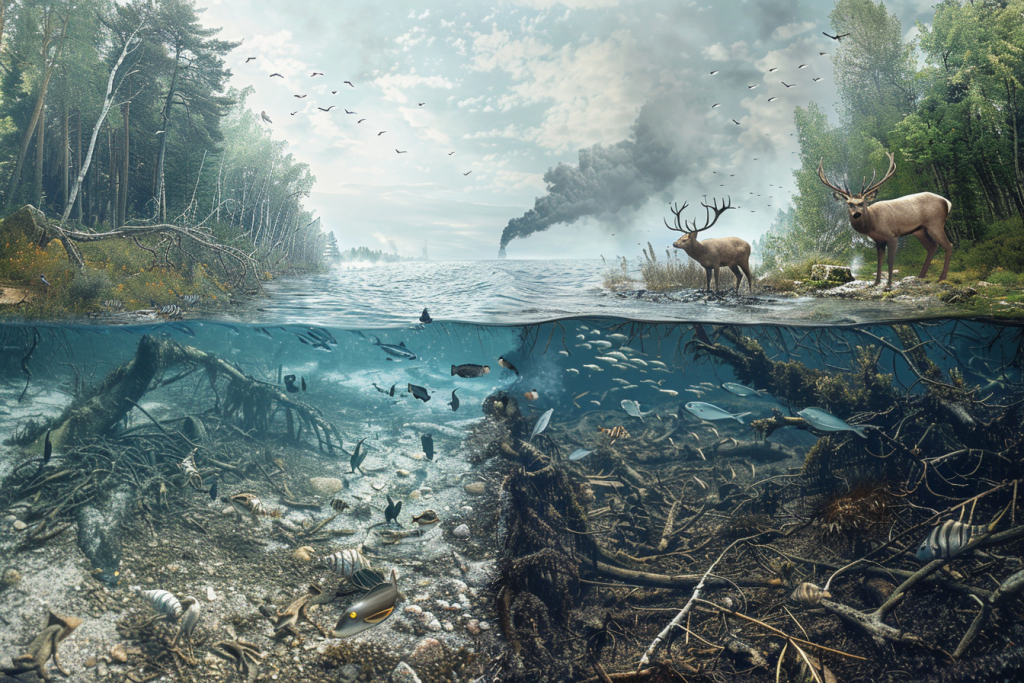
The extraction and use of oil resources not only damages the land and water due to the use of drilling, but it also adds to the pollution due to the spills that occur during drilling, and the air and soil contamination during the refining and transport process of the oil.
These impacts harm ecosystems, wildlife, and human health long before the oil is even burned.
Greenhouse Gas Emissions: How Burning Oil Affects the Climate
Just like other fossil fuels, burning oil also releases huge amounts of carbon dioxide and greenhouse gases, trapping the heat in the atmosphere. This raises the global temperatures and also increases extreme weather events.
Energy Transition: Why Shifting From Oil Matters for the Future
The two major reasons for transitioning from using oil will always include its depletion and the amount of pollution and environmental impact caused by it. The energy transition from oil to other oil alternatives, and the renewable resources of energy will not only provide humankind with an abundance of energy sources, but also help to make the environment better.
Two alternatives to oil, both in the form of oil, and as other renewable resources have been described below, to show how we are slowly able to transition from this highly efficient yet depleting energy source.
Renewable Oil Energy Alternatives: Sustainable Options Beyond Oil
Given the outlook on peak oil and the environmental impacts of using oil, the world is now more focused on creating oil alternatives that will help us with a smooth transition to climate change, provide energy security, and also address the scarcity of fossil fuels, reducing pollution.
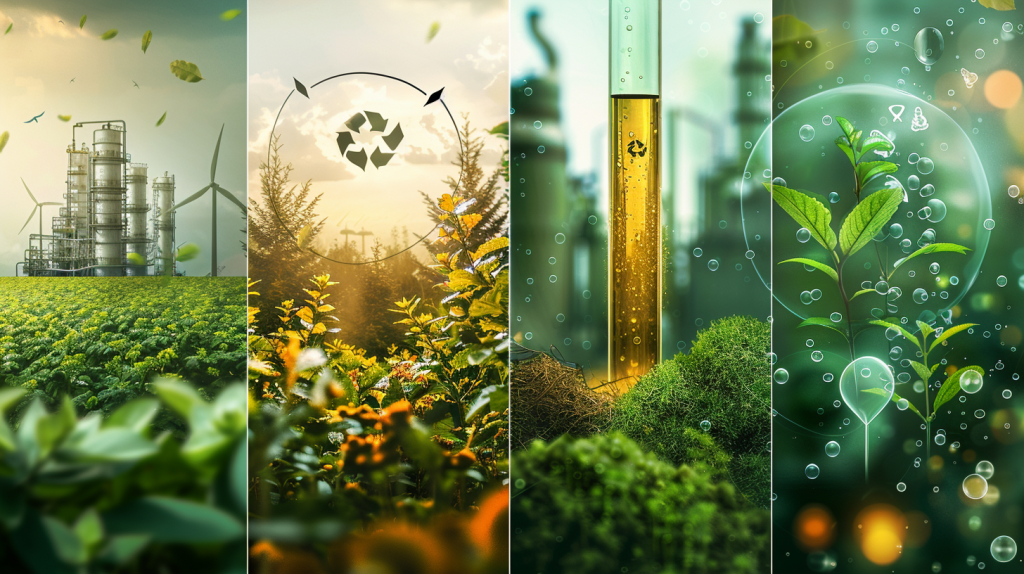
Below are the alternatives to natural oil that are being created by human efforts to combat the scarcity and environmental impact of oil consumption and its depletion over time.
| Fuel Type | Formation / Production Process | Sustainability / Longevity | Environmental Benefits |
| Renewable oil (general concept) | Produced from biomass or other renewable feedstocks | Can be continuously replenished if sourced sustainably | Partially offsets fossil CO₂ emissions; can integrate with existing fuel systems |
| Bio-oil | Thermochemical conversion of biomass | Potentially decades or centuries if biomass is sustainably managed | Lower lifecycle GHGs; reduces dependency on fossil oil; biodegradable byproducts |
| Synthetic crude oil (biomass-based) | Engineered chemical or thermal conversion | Long-term substitute if the feedstock is renewable | Avoids depleting finite reserves; emissions are lower than those from fossil oil if renewable energy is used |
| Algae-based biofuel | Cultivation and conversion of algae biomass | Virtually unlimited with scalable production | Algae capture CO₂ during growth; high yield; carbon-neutral potential |
| Hydrothermal liquefaction oil | High-pressure, high-temperature biomass conversion | Sustainable if biomass feedstock is managed responsibly | Rapid renewable oil production reduces net GHG emissions and pollution compared to fossil oil |
Solar energy, Wind energy, Biomass: Clean, Renewable Power Sources
Other than the alternative oil resources, we still have other renewable energy sources that can help to take up the place of oil, and transition humans to efficient and environmentally friendly energy consumption.
These clean energy sources are already being used across the globe, and we have detailed information on them available on our website. The table given below explains their concepts briefly and also gives you the links to access the full blogs if interested.
| Energy Source | Brief Definition | Key Benefits | Link to Full Blog |
| Solar Energy | Harnesses energy from sunlight using panels or solar thermal systems. | Clean, abundant, low operating costs, and reduces fossil fuel use. | Read more about Solar Energy → |
| Wind Energy | Makes use of wind turbines to convert wind kinetic energy into electricity. | Renewable, scalable, low emissions, suitable for onshore and offshore systems. | Read more about Wind Energy → |
| Biomass | Generates energy by burning organic material or converting it into biofuels. | Utilizes waste, reduces landfill, and can replace fossil fuels in electricity and heating. | Read more about Biomass → |
Drop‑in Fuels: Bridging the Gap Between Old and New Energy
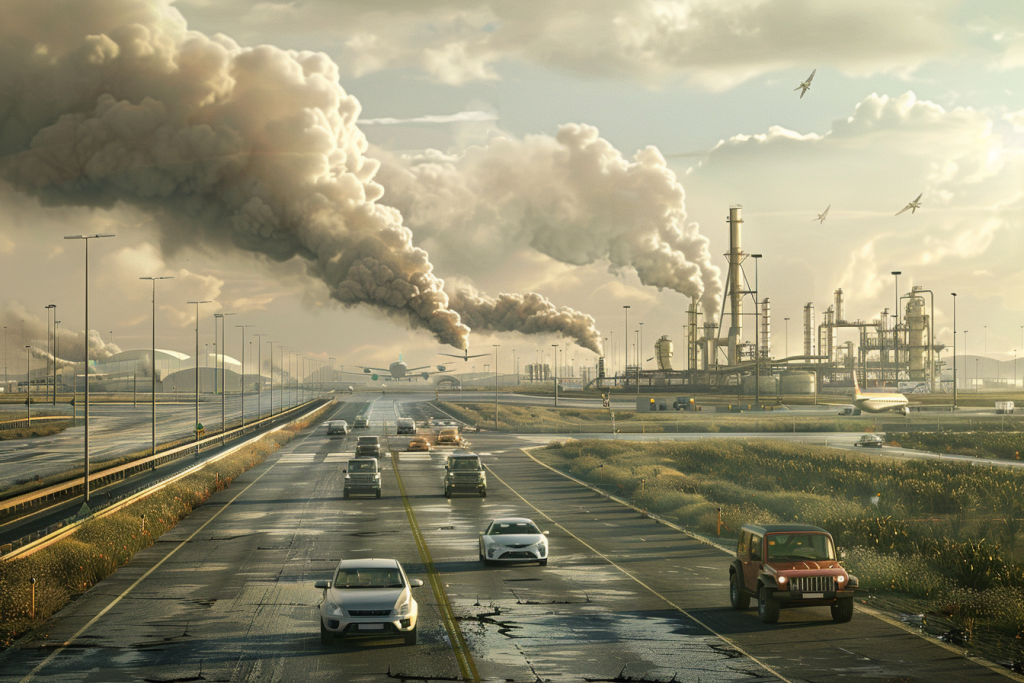
Drop-in fuels are different from the renewable oil alternatives because they are derived from biomass, algae, and synthetic processes to replace fossil fuels as a complete new resource, but the drop-in fuels act as a short-term bridge in transitioning from fossil fuel oil to the renewable oil alternatives.
These fuels are compatible with the existing vehicles, energy systems, and pipelines, and are the short-term solution to become an alternative and reduce emissions from the existing oil infrastructure using natural oil.
The examples of drop-in oils include: Hydrotreated vegetable oil (HVO), Fischer–Tropsch synthetic diesel, and algae-derived drop-in jet fuel.
Final Remarks
If we have to answer, “Is oil renewable?” the straight answer is no. But still, it is acting as an energy resource and is being wisely used across the world, gradually depleting, requiring humans to come up with alternatives that are not only able to mitigate the scarcity of depletion of oil, but also mitigate the emission of greenhouse gases and CO2.
To get more information about the green energy resources and the energy trends, keep visiting Green Energy Insights.
Frequently Asked Questions
What makes oil a nonrenewable resource rather than a renewable resource?
Oil is nonrenewable because it forms over millions of years as a fossil fuel, but we use it much faster than it can be replenished, making it a limited resource.
How long does oil take to form compared with how fast we consume it?
Oil takes anywhere between 20 and 103.75 million years to form naturally. But we are using approximately 100 million barrels a day, not naturally replenishing it due to its geological formation timescale, creating a serious risk of running out of it in the coming years.
What is peak oil, and how does it affect future supply?
Peak oil is the point where the growth of natural oil will reach its maximum limit, making the oil more costly for extraction and supply to the world, slowly leading to higher fuel prices, reduced supply stability, and increased economic pressure on energy-dependent regions worldwide.
Can bio‑oil or algae‑based biofuel replace traditional oil?
Algae biofuels have great potential, producing much more oil per acre than land crops, but they’re still too expensive to use widely, and technology needs to improve before they can replace regular petroleum fuels.
How do renewable energy alternatives like solar energy and wind energy compare to oil?
Solar and wind emit 95% fewer carbon emissions than fossil fuels, release zero harmful pollutants, and do not require water cooling, being less expensive than coal, gas, and oil.
They are coming up as superior environmental and economic alternatives to depleting oil reserves, due to providing clean, infinite energy.
What are drop‑in fuels, and how do they help the energy transition?
Drop-in fuels come from biomass and algae that work in existing vehicles and infrastructure without modification. They help humans in bridging the gap between fossil fuels and renewable alternatives, and also help reduce emissions in the short term till society can transition to fully renewable energy systems in the long term.
